Ghana economy

Economic Development in Ghana: Progress and Prospects
Ghana Launches Largest Mining Sector Audit in a Decade to Recover Revenue and Strengthen Oversight
Ghana and Zambia Pivot Diplomacy Toward Trade and Investment
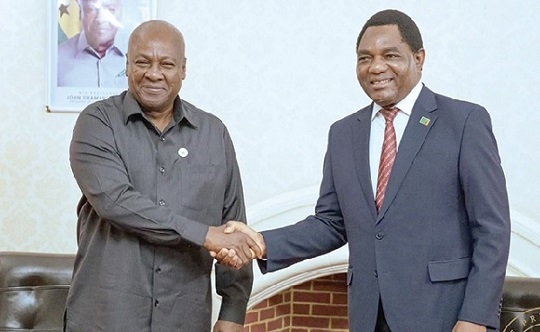
Ghana and Zambia are seeking to pivot their diplomatic relationship away from traditional government-to-government niceties toward a model focused squarely on business growth and investment.
President John Dramani Mahama made the remarks during a two-day official visit to Lusaka aimed at deepening bilateral ties, economic cooperation, and trade between the two nations.
Addressing a business forum held alongside formal talks with Zambian President Hakainde Hichilema, Mahama emphasized that both administrations are intentionally refocusing their diplomatic efforts to foster private sector collaboration and encourage cross-border investment.
He said the visit reflected a broader policy direction in which political goodwill was being translated into tangible commercial outcomes through structured platforms that connected businesses in both countries.
According to him, state visits were no longer limited to symbolic engagements but were increasingly serving as opportunities to deepen economic relations.
“This visit has not been reduced to ceremonies and banquets because we agreed that our relationship must advance towards an economic development partnership anchored on private sector engagement,” he said.
He explained that bilateral discussions had identified priority sectors for cooperation, while the business forum created opportunities for networking, roundtable discussions and industry-level dialogue.
“We recognised that these engagements allow entrepreneurs to build partnerships that will ultimately underpin relations between our two countries,” he added.

Technology And Diplomacy
President Mahama underscored the transformative role of technology in modern diplomacy, pointing out that digital tools have significantly broadened public engagement with state functions. He observed that advancements in communication technology now enable citizens and businesses to follow official proceedings in real time, fostering greater transparency and deepening cross-border interactions.
The President noted that Ghana and Zambia share complementary strengths in several key sectors, including financial technology, cybersecurity, and energy sector reforms. He highlighted Ghana’s robust digital financial ecosystem as a promising area for bilateral collaboration, while acknowledging that Zambia’s innovative energy policies offer valuable insights for Ghana’s domestic strategy.
Renewable energy emerged as a particularly promising avenue for policy exchange. President Mahama drew attention to Zambia’s framework for compensating individuals and entities that supply excess solar power to the national grid, a model he said Ghana’s energy authorities are keen to study more closely.
Beyond energy, President Mahama pointed to agriculture and trade policy as critical areas for stronger bilateral engagement.
“We acknowledged that agricultural seed development and structured import lists create opportunities to expand exports between both countries and strengthen intra-African supply chains,” he said.
Trade and Regional Integration
President Mahama noted that trade and investment flows between Ghana and Zambia remain significantly below their potential, stressing the need for deliberate policy measures to improve outcomes.
He connected this renewed push for cooperation with the broader goals of the African Continental Free Trade Area (AfCFTA).
“This dialogue has been positioned as a platform to convert political goodwill into commercial partnerships and to move relations from diplomacy towards deal-making,” he stated.
The President also provided an update on Ghana’s economic trajectory, pointing to progress in macroeconomic stabilisation and a rise in confidence indicators.
“I explained that ongoing reforms have restored stability, eased inflationary pressures, and boosted investor sentiment, paving the way for stronger partnerships,” he said.
The visit concluded with both sides renewing their commitment to expanding economic ties through closer institutional collaboration and increased private sector involvement. This marked a mutual determination to reshape bilateral relations around trade and investment, rather than formalities and protocol-driven engagements.

Ghana Pledges $500 Million to Achieve Palm Oil Self-Sufficiency and Cut Imports
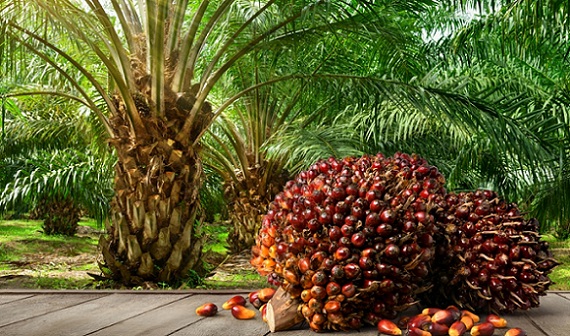
Ghana has committed $500 million to revitalize its palm oil sector as part of a bold strategy to end reliance on imports and achieve national self-sufficiency.
The investment, unveiled in the 2026 Budget and Economic Policy Statement, aims to close the current 30% production gap, equivalent to roughly $200 million in annual imports, and strengthen food security while boosting local agro-industrial development.
Central to the initiative is the newly launched National Integrated Palm Oil Development Policy (2026–2032), developed in partnership with the World Bank, the Ghana Development Bank, and other financial stakeholders. By scaling up domestic cultivation, processing capacity, and value chain infrastructure, the government seeks to transform Ghana into a net producer and potential exporter of palm oil within the next decade.

The policy establishes a long-term financing mechanism that provides concessional loans covering up to 70% of industrial project costs, with a five-year grace period, an essential support structure given that oil palm plantations typically take seven years to reach full maturity. Beyond expanding cultivation, the initiative aims to attract both domestic and foreign investment to bolster the sector’s competitiveness and resilience.
Smallholder farmers are central to the policy’s design. To empower them, the government will supply improved seedlings, offer subsidized fertilizers, guarantee off-take agreements, provide tailored financing, and deliver targeted training. A dedicated Smallholder Support Fund will further enhance access to affordable credit and skills development, with a focus on women and youth, drawing on proven inclusion models from Malaysia and Indonesia.
Despite these measures, significant challenges remain. Notably, widespread illegal imports continue to undermine local producers. Industry estimates indicate that up to 90% of the cooking oil consumed in Ghana enters the market through smuggling, bypassing quality controls and evading taxes. In response, the government is intensifying enforcement efforts to curb illicit trade, protect domestic producers, and create a more enabling environment for sustainable industry growth.
Ghana’s Economy Expands 5.1% in August 2025, Fueled by Strong Services and Agriculture Sectors
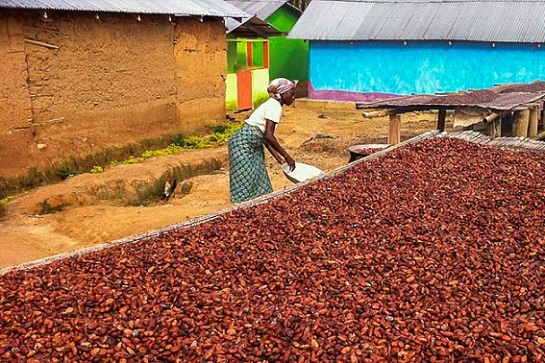
Ghana’s economy grew by a provisional 5.1% year-on-year in August 2025, according to the Monthly Indicator of Economic Growth (MIEG) released by the Ghana Statistical Service (GSS).
The services sector was the primary engine of growth, surging by 9.6% and contributing 4.08 percentage points to the overall expansion. Agriculture also posted robust performance, growing by 7.4% and adding 1.39 percentage points to GDP growth.
In contrast, the industrial sector contracted by 1.08%, dragged down by declining petroleum output, subdued manufacturing activity, and contractions in accommodation, food services, health, and social work. The data, presented by Government Statistician Dr. Alhassan Iddrisu, underscores a continued rebound in key non-industrial sectors despite ongoing challenges in industry.
Dr. Iddrisu reported that the August 2025 Monthly Index of Economic Activity (MIEG) stood at 108.0, up from 102.7 in August 2024, marking a 5.1% year-on-year expansion and reflecting stronger overall economic activity compared to the same month last year.
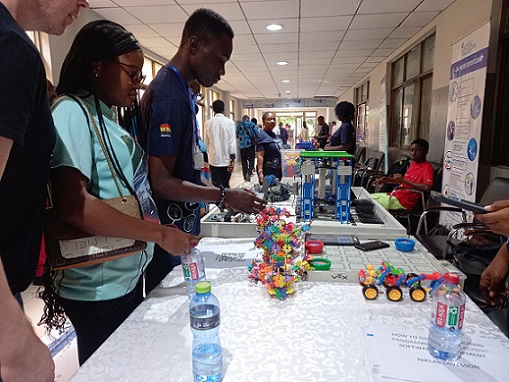
He noted that growth was driven by robust performance in several sectors, including crops, fishing, electricity generation, information and communication technology, trade, transport, storage, and education. However, industrial activity continued to lag, remaining a persistent drag on output throughout 2025.
The Government Statistician also pointed out that the average economic growth for the first eight months of 2025 was just 1.8%, significantly lower than the 10.6% recorded over the same period in 2024. This slowdown was largely attributed to a contraction in crude oil production.
Despite the recent dip in year-to-date performance, Dr. Iddrisu highlighted a steady three-year upward trend in the MIEG index, rising from 98.0 in August 2023 to 103.0 in August 2024, and now to 108.0 in August 2025, signaling a sustained strengthening of economic activity over the period.
He described agriculture’s performance as “remarkable,” with growth more than tripling last year’s 2.3%, while the services sector maintained strong momentum, its index rising from 103 in August 2024 to 113 this year. In contrast, the industrial sector saw a slight decline, dipping from 109 to 107 over the same period.
Dr. Iddrisu concluded by emphasizing that the Monthly Index of Economic Growth (MIEG) functions as an early-warning tool, empowering households, businesses, and policymakers to make informed decisions based on real-time data. He reaffirmed the Ghana Statistical Service’s (GSS) commitment to delivering timely, accurate, and comprehensive data to support national development.
Blue Gold Secures $140M to Restart Bogoso and Prestea Gold Mine in Ghana
Ghana's Economy Now Stronger and Steadier": Finance Minister Claims
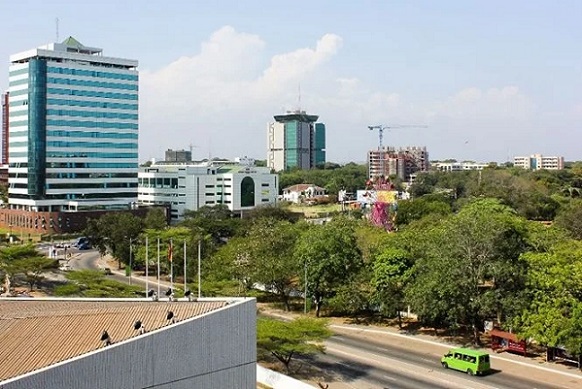
Ghana's growth prospects strengthen amidst increasing investor confidence
Ghana has emerged from its worst economic crisis in a generation and is positioned for sustained growth, Finance Minister Cassiel Ato Forson announced Thursday, declaring the nation "back, strong, credible, and open for business" during his 2026 budget presentation to parliament.
The government projects real GDP growth of at least 4.8% in 2026, backed by stringent fiscal reforms that aim to achieve a 4.0% fiscal deficit and 1.5% primary surplus.
"We have restored fiscal discipline, brought inflation under control, stabilized the cedi, and rekindled investor confidence," Forson stated, outlining a path of sustained economic recovery after Ghana's severe financial turmoil.
Dramatic inflation decline and monetary policy shift
The turnaround is most evident in inflation data, which has plummeted from a record 54% in January 2023 to just 8% in October 2024, the lowest level since June 2021 and within the government's target band. The sustained decline prompted the central bank to implement a record 350-basis-point interest rate cut in September, reducing the benchmark rate to 21.5% as macroeconomic conditions steadily improve.
Debt market return and renewed investor confidence
Forson confidently proclaimed that Ghana's narrative has shifted "from one of crisis to recovery and renewal," announcing plans to return to domestic debt markets in 2026. The finance minister directly addressed international partners, emphasizing that the country's restored economic credibility positions it as a compelling investment destination following successful implementation of prudent policies and fiscal reforms.
Tweet