Huawei Top Stories
Breaking News And Major Headlines
Huawei Targets Garmin's Core with New Eliud Kipchoge Running Watch
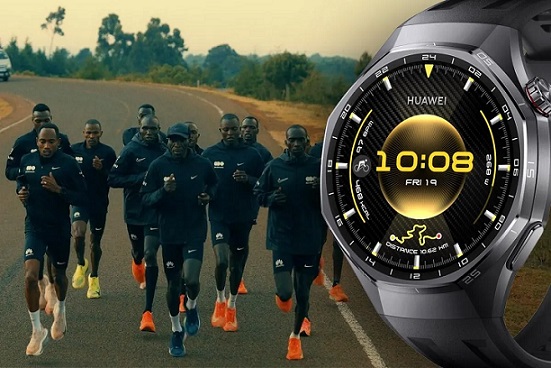
Huawei has unveiled plans for a new "next-generation" running watch developed in collaboration with marathon world record holder Eliud Kipchoge.
This marks the first specific product tied to the partnership announced earlier this month.
While technical details of the watch remain undisclosed, Huawei has elaborated on Kipchoge's role. The champion is contributing his philosophical approach to running, though how this translates into specific watch features is not yet clear. The collaboration also extends to Kipchoge's entire dsm-firmenich running team, a global elite squad with a ten-year history, suggesting a broader input than from the athlete alone.
The move positions Huawei to compete directly in the high-performance niche dominated by brands like Garmin, Coros, and Suunto. These companies already engineer products with elite athletes in mind. This strategy mirrors the "super shoe" effect in running footwear, where technology pioneered for top-tier competitors has successfully trickled down to captivate everyday enthusiasts.

Huawei's Running Team Collaboration in Watches
While consulting with a running team may offer limited insights to a company already specialized in watch development, it does signal a dedicated R&D effort behind Huawei’s upcoming watch. The company’s stated goal, to “bridge the gap between high-end functionality and user-friendly design” for both seasoned runners and beginners, remains deliberately broad.
Much of the interest will lie in how Huawei chooses to deviate from conventional fitness trackers and differentiate this model from its existing Watch GT series. The company has pointed to its 2021 Runner edition as an earlier step toward courting the running community.
In the U.S., ongoing trade restrictions will likely limit the watch’s direct impact on consumers. However, if it truly delivers “next-generation” features, it could still influence wearable trends across the industry. For now, Huawei’s messaging stays cautiously vague, summarized by CMO Alex Huang’s statement: “By combining Huawei’s expertise in smart wearable technology with the team’s deep performance knowledge, we aim to deliver meaningful insights that benefit not only elite athletes, but runners of all levels around the world.”

Huawei Returns to Europe with AI-Powered Solutions for SMEs
Huawei is making a strategic comeback in Europe, this time with a clear mission: empowering small and medium-sized enterprises (SMEs) through AI-driven digital transformation.
The company has unveiled a renewed focus on SME-centric platforms, offering simplified deployment models and unified technology packages designed to tackle common business challenges. By consolidating essential communication functions into integrated enterprise routers, Huawei enables installers to replace complex, multi-vendor setups with streamlined, all-in-one solutions, boosting efficiency, reducing costs, and accelerating digital adoption for small businesses.
Huawei has unveiled a new strategy tailored for the European small and medium-sized business (SMB) market, aiming to lower the barriers to adopting advanced technology for organizations that often lack in-house technical expertise.
At its Huawei Connect 2025 event in Madrid, the company introduced the eKit 4+10+N SME Intelligence Structure, a framework designed to deliver ready-to-deploy solutions across four key verticals: office, retail, education, and healthcare.
The framework consists of:
- 4 foundational scenarios,
- 10 pre-integrated solution packages, and
- N additional specialized products for specific deployment needs.
Huawei highlighted 26 new or updated devices within this offering, including intelligent business routers and collaboration displays with built-in AI capabilities.
The company emphasized that traditional procurement approaches, often involving fragmented hardware from multiple vendors, have led to deployment delays, compatibility issues, and increased complexity for SMBs and their installers.
In response, Huawei is shifting from selling standalone hardware to delivering pre-validated, integrated solution kits. This approach aims to simplify installation, reduce the need for technical expertise, and accelerate digital transformation for smaller organizations.
“Huawei’s European distribution business is guided by the ‘6 Easy + Enabling Partners’ Profitability’ approach,” said Steven Qin, President of European ICT Marketing and Solution Sales at Huawei.
This updated strategy focuses on delivering integrated solutions that combine routing, switching, wireless connectivity, and AI-powered conferencing tools into unified, easy-to-deploy bundles. Designed specifically with small and medium-sized enterprises (SMEs) in mind, these offerings simplify both installation for channel partners and day-to-day operation for end users, addressing the complexity often associated with traditional multi-vendor setups.
Recognising the vital role SMEs play in Europe’s economy, Huawei highlights their growing reliance on external expertise to adopt and integrate AI-driven technologies. In response, the company has introduced its new eKit portfolio to bridge common technology gaps by prioritising simplicity in deployment and management.
Key innovations include enterprise routers that consolidate multiple communication functions into a single device, and next-generation collaboration panels that enhance meeting experiences through AI-driven automation, such as intelligent acoustic tuning and real-time environmental adjustments.
For Huawei, these enhancements represent a strategic step toward creating more cohesive, efficient digital workplaces, where reliable networking, AI capabilities, and productivity tools seamlessly converge.
Huawei Is Offering Interest-Free Financing For Its Newest Car Model.
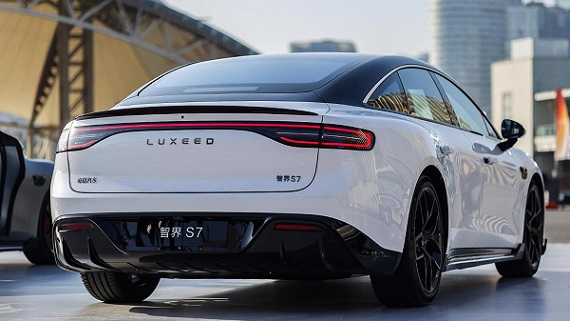
China's tech behemoth Huawei has unveiled a three-year, interest-free financing option for its recently launched Luxeed S7 electric cars, following BYD’s (1211) initiative of providing complimentary smart-driving features.
Announced on Weibo, Huawei also introduced a low-interest scheme for the initial five years for vehicles under its Harmony Intelligent Mobility Alliance smart-driving division. With these innovative schemes, purchasers of the Luxeed S7 EVs can benefit from a minimal down payment starting at 79,800 yuan (HK$85,040) and potentially save up to 17,000 yuan.
In recent times, electric vehicle producers such as Tesla, XPeng (9868), and Nio (9866) have similarly launched interest-free offers to entice buyers. On Monday, BYD announced the launch of 21 models featuring its "God's Eye" advanced driver-assistance technology, akin to that of Tesla, at no extra charge.
Among the offerings from the Chinese EV leader, the Seagull is the most affordable, with a price tag of US$9,555 (HK$74,529). Following this announcement, Huawei's executive director Richard Yu Chengdong remarked on the significant distinction between merely implementing autonomous driving and ensuring its safety and reliability, while also advocating for the company’s HIMA on Weibo.
Huawei Introduces DeepSeek-Optimized Inference Capabilities For Its Ascend AI GPUs.
On January 27, coinciding with Nvidia's stock decline after the market fully grasped the implications of the Chinese LLM for the sector, China-based Huawei published an article revealing that their distilled R1 AI model was now freely accessible via its ModelArts Studio platform. The tech giant specifically mentioned that this version is “Ascend-adapted,” referring to Huawei’s Ascend data center GPUs.
Huawei hasn’t specified which types of Ascend GPUs are utilized for ModelArts Studio, especially concerning the R1, but AI industry experts like Yuchen Jin speculate that it could be the latest Ascend 910C. This new GPU was reportedly provided to clients in September, suggesting that the 910C might already be integrated into Huawei’s cloud infrastructure.
Even though R1 was said to be trained on over two thousand H800 GPUs from Nvidia, it is noteworthy for Huawei that their GPUs have clear support for executing the LLM. This development could eliminate another step where Chinese AI companies needed to depend on Western firms, such as Nvidia and AMD, whose GPUs are highly valued for both training and inference due to their superior performance. Nonetheless, it appears that Huawei might be closing the gap.
Jin mentioned on X that the Huawei 910C’s inference capability reaches approximately 60% of the performance level of the H100, based on developers' experiences. He added that utilizing custom CUNN kernels and further optimizations can enhance this performance. Jin also highlighted that the 910C is suitable for training purposes, although the R1 was primarily trained using H800 chips. However, this doesn’t imply that DeepSeek will indefinitely rely on the H800s.
Nvidia faces a major challenge in China due to US-imposed restrictions under the Biden administration, which bar the sale of high-performance processors. This has led to a situation where many of Nvidia's top-tier data center GPUs, such as the H200 and B200, are prohibited from being exported to China, compelling Nvidia to create new versions that barely comply with the performance limits.
The H800, which DeepSeek reportedly employed to train the R1 LLM, was introduced following the initial US sanctions on GPU exports to China as a substitute for the restricted H100. However, subsequent sanctions further lowered the performance threshold for chips permissible for sale in China, resulting in the banning of the H800 and other Nvidia GPUs designed for the Chinese market.
Due to these US export restrictions, Nvidia must compete in China using less powerful hardware. The company's flagship product for the region, the H20, offers significantly reduced memory, memory bandwidth, and TFLOPs compared to the H200, which is the highest-spec Hopper-based card available.
Nvidia's performance in China has apparently been significantly affected, and by May 2024, it was offering the H20 at a lower price than Huawei's Ascend 910B. Nevertheless, sales of the H20 seemed to improve noticeably in the latter half of the previous year, with a 50% increase in revenue during Q4 compared to Q3, following consecutive quarters of solid growth. Regardless, Nvidia would undoubtedly be in a stronger position against Chinese rivals if it could market its most advanced GPUs in China.
It's not solely about Nvidia's ability to compete in China. Achieving the capability to operate a Chinese large language model with state-of-the-art performance on domestic processors would mark a significant step toward the country's goal of technological self-sufficiency. If the Ascend 910C or another Chinese GPU proves adequate for both training and inference, there may be even less demand for processors like the H20. Of course, China isn't fully prepared to completely abandon Western chips until it advances in semiconductor manufacturing, but companies such as Huawei are actively working on it.
Huawei - Building a Fully Connected, Intelligent World
Huawei, a global leader in telecommunications equipment and consumer electronics, has made significant strides in the tech industry. Known for its innovative smartphones and advanced networking solutions, Huawei continues to influence the global market despite facing various challenges, such as trade restrictions and security concerns. Delve deeper into Huawei's product offerings, technological advancements, and the latest news related to their operations.
Stay informed and up-to-date with the latest developments and top stories concerning Huawei. This platform offers a comprehensive collection of news articles, updates, and in-depth analyses related to Huawei, a global titan in the fields of telecommunications and technology. From groundbreaking advancements in 5G technology to new partnerships and strategic initiatives, NewsNow provides a diverse array of information sources that cater to various interests.
Whether you're keen on exploring Huawei's latest smartphone features, delving into their business ventures, or understanding the complexities of their regulatory challenges, this platform serves as a gateway to a rich repository of insightful content. For instance, you might find detailed reports on Huawei's role in the development of 5G networks worldwide, or analyses of their collaborations with other tech giants. Additionally, you can discover articles that examine the economic and political implications of Huawei's expansion into new markets.
Furthermore, FrizeMediaTech aggregates information from an extensive range of sources, ensuring that you have access to balanced and varied perspectives on Huawei's influence in the technology industry. This allows readers to gain a well-rounded understanding of the company's impact and future directions. By visiting this link, you can stay informed about the myriad aspects of Huawei's operations and their contributions to the ever-evolving tech landscape.
Huawei Technologies Co., Ltd. is a global corporation based in Longgang, Shenzhen, Guangdong, China, specializing in technology and telecommunications. Established in 1987 by Ren Zhengfei, a former officer of the People's Liberation Army, the company engages in the design, development, production, and sale of digital telecom equipment, consumer electronics, smart gadgets, distributed operating systems, autonomous driving systems for electric vehicles, and various solar energy products for rooftops.
Initially concentrating on producing phone switches, Huawei has extended its reach to over 170 countries, constructing telecom network infrastructures, delivering equipment, offering operational and advisory services, and crafting communication devices for consumers. Surpassing Ericsson in 2012, Huawei became the world’s leading manufacturer of telecommunications equipment. By 2018 and 2020, the company had outpaced Apple and Samsung, respectively, to emerge as the foremost smartphone producer globally. As of 2024, its primary business lies in telecommunications equipment, with the Chinese government as its major client.
Breaking News On Top Tech Giants
Tweet