Energy and Utilities
The Future of Energy: News & Updates

Alternative Energy Water Utilities Industry Sectors Russian Oil Centrica Nicolas Maduro Centrica Nuclear Energy Coal Natural Gas Renewable Energy Natural Gas Oil And Gas Orsted Drax Group National Grid Ofgem Enel E.ON Ovo Energy Octopus Energy NextEra Heat Pumps Iberdrola CEZ RWE British Gas EnBW Water
Germany Scales Back Gas Plant Expansion, Prioritizes Hydrogen-Ready Infrastructure in Energy Transition
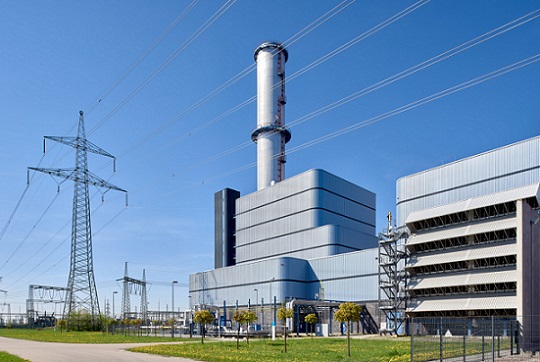
Germany is scaling back plans to build new natural gas–fired power plants as part of its evolving energy strategy.
While the government remains committed to decarbonization, it also recognizes the need for reliable backup capacity to support the country’s growing share of renewable energy.
In November, Chancellor Friedrich Merz and his coalition partners, primarily from the Social Democratic Party, reached a compromise between advocates pushing for a faster exit from fossil fuels and industry stakeholders concerned about grid reliability and affordable power. Germany has already phased out coal and shut down its last nuclear reactor in 2023. Moving forward, the government emphasized that any newly approved gas-fired plants must be capable of running on hydrogen. “All future tenders for power stations will require that they be technically ready to operate on hydrogen,” Merz stated.
Merz recently stated that the European Commission (EC) has signaled its support for Germany’s energy strategy. This includes Germany’s commitment to develop at least 2 GW of new power generation capacity, technology-neutral, potentially encompassing battery energy storage systems. Officials also announced plans to launch tenders this year for at least 8 GW of additional generation capacity, with the new facilities expected to enter commercial operation by 2031. In line with the country’s goal of achieving a carbon-neutral power sector by 2045, some of these new units may be required to incorporate carbon capture and storage (CCS) technology.
“The German government was compelled by the European Commission to scale back its energy targets, directly undermining the Merz plan for energy security,” said Guido Núñez-Mujica, Director of Data Science and Senior Policy Advisor at the Anthropocene Institute. “Although the proposed gas plants are hydrogen-ready, it’s crucial to recognize that there is currently no commercial hydrogen supply at this scale, and no certainty that the necessary technology and infrastructure will be in place by 2030, or even by 2045.”
Núñez-Mujica added, “This gas was intended to replace coal, yet even the 20 GW of capacity rejected by the European Commission falls far short of offsetting the roughly 30 GW of coal generation still operating today.”
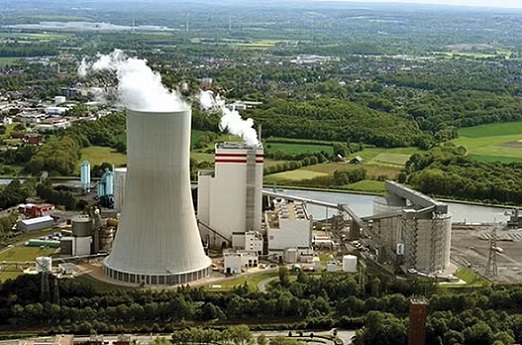
The Lünen coal-fired power plant is a 750-MW facility located in North Rhine-Westphalia, Germany. Operated by Trianel, it is the company's primary coal-fired power station in the country and was recognized with a Top Plant award in 2014. As part of Germany’s national coal phase-out strategy, the plant is slated for closure. In response, Trianel is pivoting toward renewable integration and grid stability solutions, including large-scale battery energy storage systems (BESS). Notably, the company announced plans last summer to develop a 900-MW BESS in nearby Waltrop, also in North Rhine-Westphalia, marking a significant step in its transition from fossil fuels to clean energy infrastructure.
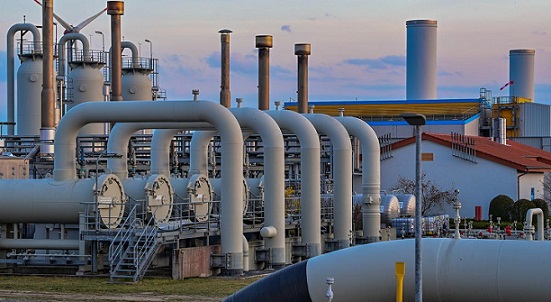
Germany at a Crossroads: Energy Crisis Forces Tough Choices on Nuclear, Coal, and Hydrogen
Speaking to reporters, he warned, “This is an unwelcome setback for Germany and may push the government to consider difficult options: restarting idle nuclear plants, extending the life of coal-fired facilities, or accelerating deindustrialization. Compounding the challenge, clean energy output this year is markedly lower than last year’s, underscoring the volatility of renewable supply. Germany now faces stark choices, and a strategic course correction appears inevitable.”
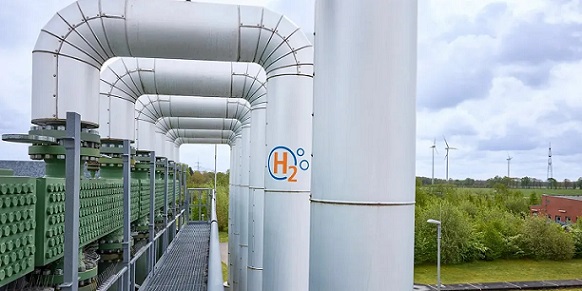
Katherina Reiche, Germany’s Minister for Economic Affairs and Energy, has expressed skepticism about plans to ensure new gas-fired power plants can be converted to run on hydrogen. In remarks to German media, she called it “unlikely” that enough hydrogen would be available by 2030 to operate such units at scale.
Reiche, who unveiled Germany’s hydrogen strategy in September of last year, has advocated for a more demand-driven approach. She argues that hydrogen market development should hinge on end-users’ willingness to pay for the fuel, rather than rigid supply-side mandates. To that end, she has proposed replacing fixed electrolyzer expansion targets with “flexible targets” tied to concrete, demand-side projects. Her stance emphasizes launching hydrogen production initiatives “as needed,” aligning infrastructure investments with actual market demand.
Merz, who assumed office in May 2025, leads a coalition government formed by the conservative CDU/CSU alliance and the Social Democratic Party (SPD). A central plank of their joint campaign platform was accelerating Germany’s economic recovery, with a specific commitment to lowering energy prices. However, critics argue that the government has fallen short in delivering tangible economic support and has made insufficient progress on rebuilding aging infrastructure and advancing new energy projects. Public sentiment appears to reflect this discontent: a recent poll found that just over a quarter of the population holds a favorable view of Merz’s administration after only six months in office. The next federal election for chancellor is scheduled for 2029.

Germanyy's Energy Renewable Transition Challenges
Germany has made significant progress in expanding renewable energy: according to the International Energy Agency, wind, solar, hydropower, and biomass have collectively supplied more than half of the country’s electricity in recent years, following the phaseout of nuclear power and the gradual reduction of coal-fired generation.
However, the industrial sector has raised concerns that rising electricity demand, driven by economic recovery and growth, is straining the grid and highlighting the need for reliable baseload capacity to complement intermittent renewables. This tension between energy security and climate ambitions has sparked calls for additional measures, similar to those adopted elsewhere, to bolster supply without compromising Germany’s decarbonization goals.
Georg Rute, CEO of Gridraven, a provider of dynamic line rating (DLR) technology for electricity transmission, stated: “Phasing out natural gas is a geopolitical imperative for Germany. In contrast, solar and wind offer both energy security and price stability. To achieve its goal of sourcing 80% of its electricity from renewables by 2030, Germany is aggressively expanding and modernizing its transmission grid.
Much of the new capacity will come from offshore wind farms in the North Sea. TenneT, the transmission system operator responsible for connecting this northern generation to industrial demand in southern Germany, recently unveiled a €65 billion ($75.5 billion) investment plan through 2029 to reinforce the grid. Notably, TenneT is one of the few grid operators with a long-standing track record in grid optimization tools like dynamic line rating, where even modest increases in transmission capacity can translate directly into lower power costs for consumers.”
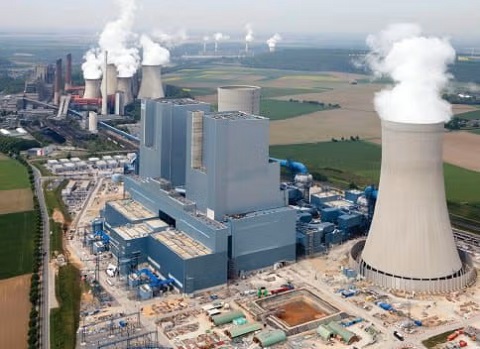
Germany Scales Back Gas-Fired Power Plans Amid Grid Modernization and Climate Pressures
German officials continue to back the expansion and modernization of the power grid to accommodate greater renewable energy integration. However, tensions persist over aligning rising electricity demand with decarbonization goals.
Political consultant Irina Tsukerman notes that the recent decision to halve the planned new gas-fired capacity, from an initial 20 GW target proposed in early 2025 to 10 GW, reflects a convergence of three key pressures: the urgent need for flexible power generation, lingering fiscal and political constraints from the 2022–2023 energy crisis, and tightening EU climate and industrial policies.
Originally envisioned as a temporary “bridge” to balance renewables after the phaseout of coal and nuclear power, the scaled-back gas strategy signals Berlin’s recognition that relying heavily on imported gas for long-term grid stability is neither economically viable nor politically tenable.
Tsukerman noted that Germany is confronting significant headwinds in its energy sector. “The first major constraint is financial,” he said. “Following the 2022–2023 energy crisis, Berlin committed tens of billions of euros to shield households and industries from soaring gas and electricity prices, rapidly construct floating LNG (liquefied natural gas) terminals, and recapitalize utilities destabilized by the sudden loss of Russian supply.
These emergency measures were added on top of Germany’s already ambitious climate and industrial policy agenda, which includes substantial subsidies for green hydrogen, battery manufacturing, and heat pump deployment, straining public finances even further.”
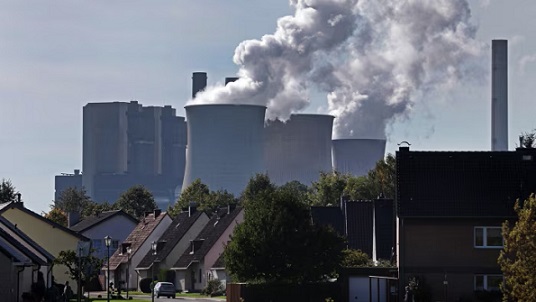
Tsukerman added: “At this critical juncture, finance ministry officials are grappling with persistent structural deficits, while courts have struck down the use of off-budget climate funds. Every long-term infrastructure commitment, especially one as significant as twenty gigawatts of new gas capacity, is under intense scrutiny, not just from regulators but from the public as well.
Such a plan would entail tens of billions in capital spending, decades-long contracts, and ongoing capacity payments. Halving the target is a strategic compromise: it aims to reassure utilities and heavy industry by guaranteeing a baseline of dispatchable power, while simultaneously reducing the fiscal burden and political risk of locking in massive gas infrastructure for years to come.”
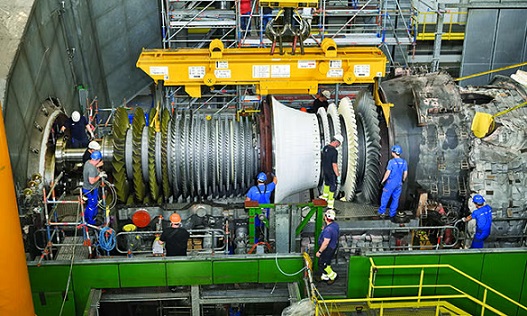
Hydrogen Hopes vs. Gas Reality: Germany’s Climate Dilemma in Power Plant Planning
Critics warn that Germany’s push to build new gas-fired power plants, even those designed to eventually run on hydrogen, risks undermining the nation’s climate goals unless a concrete strategy for scaling up green hydrogen production is implemented. Industry analysts stress that without substantial government subsidies, which appear unlikely amid current economic constraints, large-scale hydrogen production remains unviable.
Energy official Reiche acknowledged that sufficient green hydrogen won’t be available by 2030, leaving gas plants as a necessary fallback to avoid prolonged reliance on coal. Although Germany’s previous government mandated that new gas plants be hydrogen-ready and intended to enforce a transition to green hydrogen, it collapsed before enacting binding regulations, leaving the energy transition in limbo.
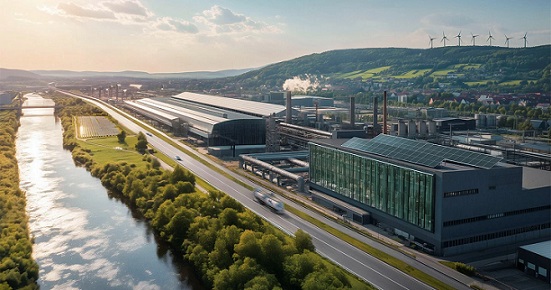
Germany’s Energy Tightrope: Betting on Renewables Amid Shrinking Backup Capacity
Tsukerman warned that recent revisions to Germany’s energy strategy place the country in a precarious position. “Germany is committing to significantly higher electricity demand as it electrifies heating, transportation, and industrial processes, yet it is simultaneously reducing its stock of firm, dispatchable capacity that can be reliably activated during prolonged periods of low wind and solar output,” she said. “Halving the gas target amounts to a high-stakes bet on the rapid and large-scale deployment of renewables, storage, and grid flexibility.
If wind and solar expansion falters once again, if energy storage fails to move beyond niche applications, or if cross-border interconnector upgrades fall behind schedule, Berlin may be forced into difficult decisions: extending coal use beyond current plans, imposing costly curtailments on industry, or reversing its newly imposed gas cap.”
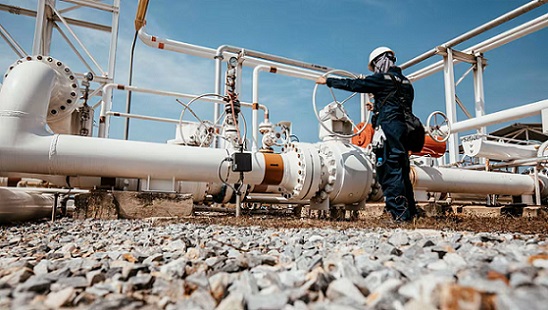
“There’s also a geopolitical dimension,” said Tsukerman, highlighting how Germany’s evolving generation mix is reshaping global energy dynamics. “Germany’s waning appetite for new gas infrastructure is shifting long-term expectations among LNG exporters, particularly in the U.S. and Qatar, who had counted on the country as a reliable, long-term buyer. With shorter contracts, smaller volume commitments, and a clear signal that gas demand will peak and then decline, Germany is becoming a far less attractive anchor customer for new upstream projects.
This not only undermines investment cases for future LNG developments but also reinforces a broader global narrative: Europe is accelerating its transition away from fossil fuels, and natural gas may soon face the same structural demand erosion that has already overtaken coal.”
Tweet