Ghana GoldBod News & Updates
How Ghana GoldBod Works: A Complete Guide

Ghana News and Updates Ghana Economy Business Marketing Small Business Advice Business Marketing Strategies Mining Energy
The GoldBod Effect: Why Seven African Countries Are Studying Ghana’s Push to Formalize Gold
A Continental Classroom in Accra
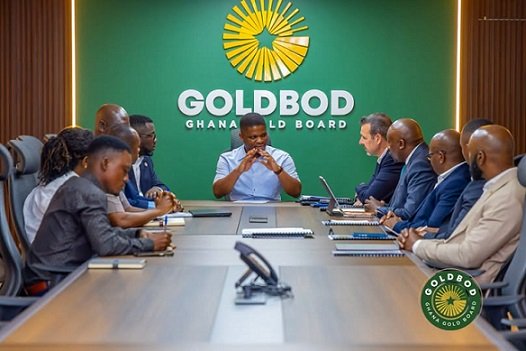
Over the past year, Ghana has become an unexpected classroom for African gold governance. Seven countries, Sierra Leone, Mozambique, Tanzania, Zimbabwe, Zambia, Sudan, and Namibia, have sent delegations to the Ghana Gold Board, widely known as GoldBod. They did not come simply to observe. They came with a shared and urgent question: how do you bring artisanal and small-scale mining into a formal, traceable system without shutting the miners out?
It is a question that resonates across a continent where gold is abundant but often poorly governed. From the pit to the port, much of Africa’s gold travels through informal channels. Some of it is smuggled. Some is sold to unlicensed traders. Some is linked to environmental destruction, child labour, mercury contamination, or armed conflict. Governments lose revenue, communities lose clean water, and legitimate miners lose access to fair prices and formal markets.
Ghana’s answer has been GoldBod, an institution designed to sit at the centre of the country’s gold governance. Its core ambition is not merely to regulate gold, but to reorganise it: to create a system in which small-scale miners can operate legally, sell transparently, and remain part of the economy rather than being criminalised out of it. For a year now, other African states have been watching closely, and arriving in Accra to take notes.

Background: Africa’s Gold Paradox
Africa is one of the world’s most important gold-producing regions. Yet for decades, the continent has struggled with a paradox. Gold generates billions of dollars in exports, but many mining communities remain poor. Large-scale mining brings investment and royalties, while artisanal and small-scale mining supports millions of livelihoods directly and indirectly. The problem is that a large share of this smaller-scale production remains informal.
Informal mining is not simply a legal problem. It is a governance problem. When miners operate outside the system, they are vulnerable to exploitation by middlemen, exposed to dangerous working conditions, and unable to access finance, training, or safe equipment. Governments, meanwhile, struggle to collect taxes, monitor environmental damage, or prove where their gold comes from. International refiners, banks, and jewellery brands increasingly demand assurance that gold is responsibly sourced. Without traceability, African gold risks being locked out of premium markets or priced at a discount.
Ghana knows this challenge intimately. Gold is a cornerstone of its economy, but the country has also become a symbol of the battle against galamsey, illegal small-scale mining that has polluted rivers, degraded farmland, and sparked repeated public outcries. Previous crackdowns have sometimes pushed miners further underground, making the problem harder to monitor. GoldBod emerged from the recognition that enforcement alone cannot solve the issue. If the state wants traceable gold, it must also offer miners a credible legal pathway.
What GoldBod Is Trying to Do
GoldBod’s model is built around a simple but difficult idea: formalisation must be practical, not punitive. The board is intended to bring order to the gold supply chain by licensing miners and buyers, providing a transparent market for gold, and documenting its journey from extraction to export. By offering miners a legal buyer and a fair price, the system aims to reduce the incentive to smuggle or sell to informal traders.
Traceability is central. In a well-functioning system, gold can be linked to a licensed operation, a known location, and a documented transaction. That makes it easier for Ghana to comply with international responsible-sourcing standards, attract legitimate buyers, and capture more value locally. It also gives the state a clearer picture of how much gold is actually being produced, and how much revenue should be flowing to the treasury.
Crucially, GoldBod is not designed to eliminate artisanal mining. It is designed to distinguish between miners who are willing to operate within the law and those who deliberately evade it. The difference matters. A policy that treats every small-scale miner as a criminal will fail because it ignores the reality that millions of people depend on the sector. A policy that brings miners into the formal economy, by contrast, can improve oversight, reduce environmental harm, and gradually raise standards.

Why Other Countries Are Interested
The delegations arriving in Ghana are not looking for a perfect model. They are looking for lessons, what works, what does not, and what can be adapted to their own political and geological realities. Sierra Leone’s Minister of Finance, Sheku Ahmed Fantamadi Bangura, described the GoldBod model as a potential blueprint for sustainable gold-sector reform in Africa. That is a significant endorsement from a country that has its own long and complicated history with mineral governance.
Tanzania’s Minerals Commission delegation, led by Dr. Theresia Numbi, said it chose Ghana after comparing several countries, calling it a pioneer and a centre of excellence on the continent. Namibia’s team called the model a robust framework it could draw lessons from. Mozambique, Zimbabwe, Zambia, and Sudan have also sent delegations, each with its own mix of challenges: smuggling, informal trading, weak licensing, foreign control, conflict, or the need to diversify away from other minerals.
Their interest reflects a broader shift. African governments are increasingly asking why the continent exports raw gold only to import refined value, luxury goods, and financial services. They want stronger links between mining and national development. They want gold to support foreign exchange reserves, local industry, and community investment. And they want to meet global standards without surrendering control of their own resources.

The Hard Part
Formalising gold is easier to announce than to achieve. Gold is portable, valuable, and easy to conceal. A miner who is offered a low price by a state buyer may still prefer a smuggler who pays cash immediately. A licensing process that is slow, expensive, or corrupt will push people away. A traceability system that depends on paperwork alone can be falsified. And if enforcement is aggressive without alternatives, it can spark resistance and deepen informality.
The GoldBod model therefore depends on trust. Miners must believe that the system will pay them fairly and consistently. Communities must see benefits, better water, safer conditions, rehabilitation of degraded land. Buyers must believe that Ghanaian gold is genuinely traceable. And the state must be able to resist elite capture, political interference, and the temptation to use the system as a revenue extraction machine rather than a development tool.
Environmental and social risks also remain. Mercury use, deforestation, water pollution, and child labour are real problems in artisanal mining across Africa. A formalisation programme can address them only if it includes training, safer technology, monitoring, and penalties for abuse. The goal is not to pretend these problems do not exist, but to create a system where they can be reduced over time.

What Happens Next
Ghana set out to fix its own gold sector. A year of visits suggests the rest of the continent is watching what happens next. If GoldBod succeeds, it could become a genuine African blueprint, a way for countries to turn artisanal gold from a governance headache into a source of legal trade, public revenue, and local development. If it stumbles, it will be a cautionary tale about how difficult it is to formalise a sector built on informality, poverty, and powerful informal networks.
The delegations from Sierra Leone, Mozambique, Tanzania, Zimbabwe, Zambia, Sudan, and Namibia are not merely being diplomatic. They are searching for solutions. Their presence in Ghana shows that African countries are increasingly willing to learn from one another rather than relying solely on outside consultants or donor-driven templates. That is significant in itself.
But the real test is not how many delegations arrive. It is whether GoldBod can deliver on its central promise: a gold sector that is formal, traceable, and inclusive. If it can, Ghana will have done more than reform its own industry. It will have offered the continent a model for how to govern gold without leaving miners behind.

Tweet