Two Cousins, Two Fates: How Jensen Huang’s Resignation and AMD Lisa Su’s Ascent Reshaped the Chip Industry
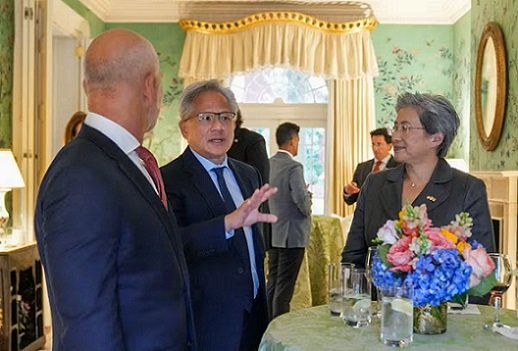
Are Jensen Huang and Lisa Su Really Cousins? The Family Connection Explained
Nvidia Apple Microsoft AI Innovation Homebusiness Google Corporate Identity Management Thought Leadership Career Test Forex Market Trading Investments Wealth Small Biz Branding Niche Marketing Public Relations Self Empowerment Meta Marketing Sales Effective Time Management Success Advertising Small Business StartUp Entrepreneur Achieve Your Goals Accomplishments and Achievement Business Marketing

From Family Ties to Industry Fault Lines: Huang’s Exit and Su’s Rise
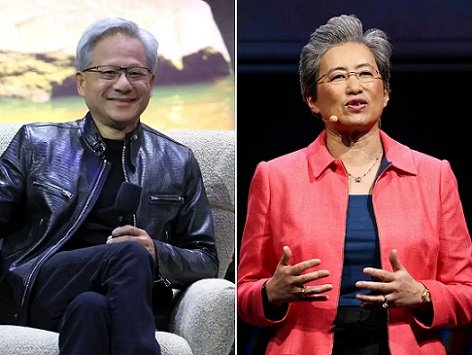
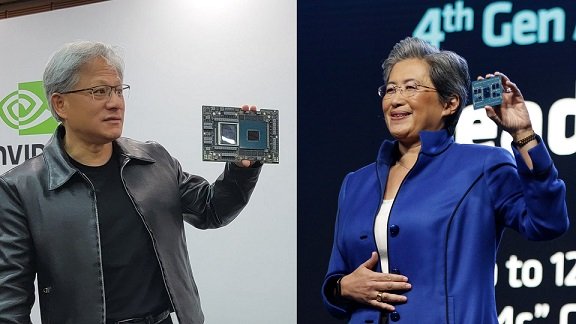
NVIDIA and AMD are not just rivals in the semiconductor industry, they are led by two first cousins once removed, Jensen Huang and Lisa Su.
Their family connection is distant and professional rather than personal, yet it adds a remarkable human dimension to one of the most consequential corporate battles in technology. As NVIDIA confronts a leadership crisis following Jensen Huang’s resignation, the question of whether the company can thrive without its co-founder has become urgent, and the answer depends on whether NVIDIA’s advantage lies in its technology, its culture, or the singular vision of one man.
The Family Tie: First Cousins Once Removed
Jensen Huang and Lisa Su are first cousins once removed, a relationship confirmed by NVIDIA to CNN and traced by Taiwanese genealogist Jean Wu. The connection runs through Huang’s mother and Su’s maternal grandfather: Huang’s mother is the sister of Su’s grandfather, making Huang the older cousin to Su by roughly one generation.
Despite the blood relation, the two did not grow up together. Both were born in Taiwan and moved to the United States as children, Huang in Taipei, Su in Tainan, but their families were not close. They met for the first time at an industry event well into their respective careers. Su has famously joked about the relationship: “No family dinners” . Huang has described Su as “terrific,” while Su has called their parallel paths “a wild coincidence” .
The family connection is real but emotionally distant, a genealogical curiosity that underscores how two people from the same extended family ended up leading the two most important companies in the AI chip race.
Two Approaches to Business: Visionary Architect vs. Operational Turnaround Artist
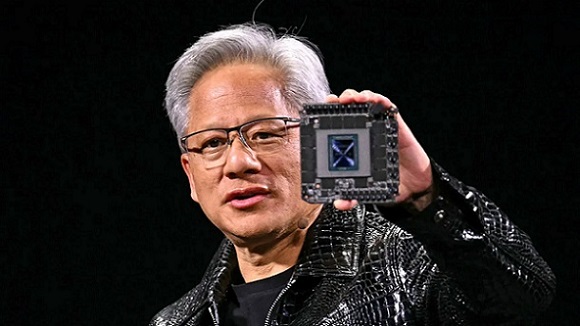
Jensen Huang: The Platform Builder
Jensen Huang co-founded NVIDIA in 1993 and served as its only CEO for 33 years. His approach to business can be characterized as platform-centric, top-down, and vision-driven:
- Flat organizational structure: Huang has maintained an unusually flat hierarchy, with as many as 60 direct reports at times, allowing him to stay close to engineering and product decisions.
- Ecosystem lock-in: Under Huang, NVIDIA built CUDA, a parallel computing platform that became the de facto standard for AI development. This created a deep software moat that competitors have struggled to replicate.
- Supply chain mastery: Huang personally cultivated relationships with critical suppliers and customers, securing priority capacity for NVIDIA’s chips and making the company the gatekeeper of AI compute.
- Public evangelism: Huang became the public face of the AI revolution, using his platform to shape narratives around artificial intelligence and NVIDIA’s central role in it.
His leadership style is often described as “Jensen is NVIDIA. NVIDIA is Jensen” , a testament to how deeply his identity is fused with the company.
Lisa Su: The Turnaround Operator
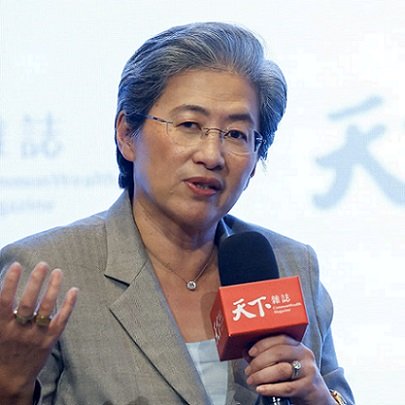
Lisa Su joined AMD in 2012 and became CEO in 2014, inheriting a company on the brink of collapse. Her approach is disciplined, customer-focused, and execution-oriented:
- Semi-custom strategy: Su pivoted AMD toward designing customized chips for specific customers, securing lucrative contracts for Sony’s PlayStation 4 and Microsoft’s Xbox One.
- Focus and simplification: She simplified AMD’s product roadmap, repaired relationships with key stakeholders, and placed concentrated bets on high-performance computing and AI.
- Hands-on leadership: Su is known for attending roadmap meetings, reading online forums for user feedback, and holding weekend meetings, she believes “leaders are trained, not born” .
- Transformative acquisitions: Under her leadership, AMD acquired Xilinx and made strategic investments in AI, transforming from a struggling chipmaker into a credible challenger to NVIDIA.
Jensen Huang (NVIDIA)
- Leadership style: Visionary and top-down, with a flat hierarchy.
- Strategic focus: Building a platform ecosystem around CUDA and pursuing AI dominance.
- Key strength: Supply chain relationships and industry evangelism.
- Tenure: Co-founder and CEO since 1993.
Lisa Su (AMD)
- Leadership style: Disciplined, hands-on, and execution-focused.
- Strategic focus: Customer-specific solutions and high-performance computing.
- Key strength: Turnaround execution and operational focus.
- Tenure: CEO since 2014; joined AMD in 2012.
The Numbers: NVIDIA and AMD at a Glance
As of late 2026, the two companies operate at vastly different scales:
- NVIDIA: Market capitalization of approximately $5.2–$5.5 trillion, with roughly 42,000 employees.
- AMD: Market capitalization of approximately $870 billion to $950 billion, with roughly 31,000 employees.
NVIDIA’s valuation reflects its dominant position in AI chips, while AMD has staged a remarkable recovery under Su, growing from a market value of under $2 billion when she took over to nearly $1 trillion.
Can NVIDIA Thrive Without Its Co-Founder?
Jensen Huang’s resignation in November 2026, following revelations of extramarital affairs and scrutiny over foreign intelligence contacts, has thrust NVIDIA into an unprecedented succession crisis. The core question is whether the company’s success is structural or personal.
The Case for Resilience
Some analysts argue that NVIDIA’s competitive advantages are embedded in the company, not just in its leader:
- Demand for NVIDIA’s chips will not disappear overnight. The AI industry’s reliance on NVIDIA’s GPUs is structural, and the company’s technology lead is substantial.
- NVIDIA has a deep bench of talent. Tae Kim, author of The Nvidia Way, argues that the company can thrive under a new CEO, naming Rene Haas (Arm CEO) and Ian Buck (inventor of CUDA) as strong potential successors.
- CUDA remains a formidable moat. Even without Huang, the software ecosystem he built continues to lock customers into NVIDIA’s platform.
- Interim leadership is capable. CFO Colette Kress, who has been with NVIDIA since 2013, has taken over as interim CEO, providing continuity.
The Case for Caution
Others warn that Huang’s value extends far beyond technology:
- No clear successor. Analysts at Melius Research noted that “there is no clear successor to Jensen,” and Bernstein’s Stacy Rasgon famously said, “Jensen is Nvidia. Nvidia is Jensen” .
- Relationships are personal. Huang’s influence over suppliers, persuading smaller companies to commit capacity to NVIDIA—may be difficult to transfer to a new leader.
- Vision is irreplaceable. As one analyst put it, NVIDIA’s valuation reflects not just what it sells but expectations of what AI could become. “Replacing that vision may prove harder than replacing the CEO” .
- Governance risk was always present. NVIDIA’s financial filings explicitly warn that failure to ensure effective succession planning could affect long-term success.
The Verdict
NVIDIA will almost certainly survive without Jensen Huang. Its technology, customer relationships, and market position are too strong to collapse overnight. But thriving, sustaining the relentless pace of innovation and the visionary leadership that made NVIDIA the defining company of the AI era, is a far harder question. The answer will depend on whether the board can find a leader who can combine operational excellence with strategic vision, and whether NVIDIA’s culture of flat, engineering-driven decision-making can outlast the man who built it.
The irony is inescapable: the person best positioned to understand what NVIDIA needs may be Lisa Su, Huang’s distant cousin and the CEO who transformed AMD from a near-bankrupt also-ran into NVIDIA’s most credible challenger. Whether she would ever consider such a move, and whether NVIDIA’s board would approach her, remains speculation. But the family connection that once seemed like a curious footnote now sits at the center of the semiconductor industry’s most consequential leadership question.
Tweet