Second Law of Thermodynamics
Nature vs Mankind

Save Energy And Save Our Planet
One Planet - Managing Our Waste Responsibly
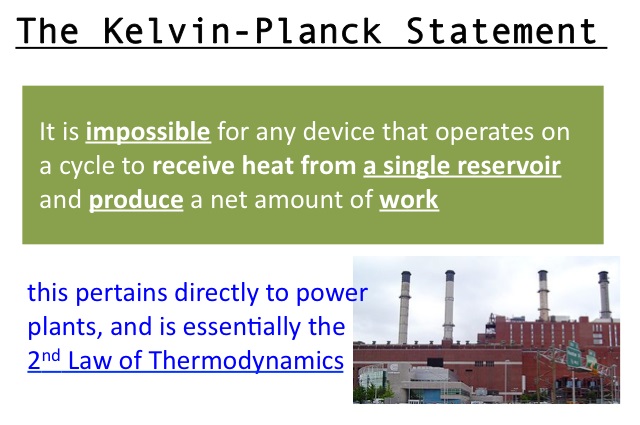
The Second Law of Thermodynamics describes the inevitable increase of entropy in isolated physical systems, pointing toward a gradual energetic decay. If we consider the Universe as a whole to be such a closed system, its ultimate thermodynamic fate is one of growing disorder.
However, within localized, open subsystems, entropy does not always reign unchecked. Here, order can temporarily arise and persist, fighting back against disorder. Through energy and matter exchange with their surroundings, these systems may experience local decreases in statistical entropy, regions where structure, complexity, or organization increase.
Conversely, some physical systems amplify entropy, whether by decaying internally or by exporting disorder to their environment. They act as drivers of disorganization, propagating randomness beyond their own boundaries. We may call these entropic agents: entities or processes that actively spread disorder into other systems, accelerating the march toward thermodynamic equilibrium on a local or broader scale.
Refined Definitions & Concepts
1. Entropic Agents: Systems or actions that accelerate the dispersal of energy and matter, leading to increased disorder, homogenization, and a loss of structured complexity within a given system. Their "work" degrades gradients and differences.
2. Negentropic Agents: Systems or actions that locally and temporarily reverse the entropic trend. They build, maintain, or increase order, structure, and complexity by consuming energy and exporting disorder (entropy) to their environment. Life itself is the quintessential negentropic process.
The Human Paradox: From Negentropy Awry to Active Entropy
This insight is powerful: humans have transitioned from one state to another.
Negentropic Agents Gone Awry: For millennia, humans were imperfect negentropic agents. We built societies, agriculture, and cities (order), but often at the expense of local environments (exported disorder through deforestation, soil depletion). The "awry" part was a lack of understanding of the systemic, long-term consequences and the finite capacity of environmental sinks.
Transformation into Entropic Agents: In the Anthropocene, the scale and nature of our actions have qualitatively changed. We are now net producers of systemic disorder, not just localized exporters.
The Key Shift: Our tools (fossil fuels, industrial chemistry, global supply chains) allow us to break down complex, ancient systems (e.g., fossilized biomass into CO₂, old-growth forests into lumber and farmland, mineral deposits into dispersed heavy metals) at a rate far exceeding the biosphere's ability to reconstitute order. We are actively simplifying the planet's biophysical systems.
Categorizing the Examples: A Deeper Look
These examples perfectly illustrate the entropic agency:
Antibiotics: Introduce disorder into microbial ecosystems. While creating order in human health, they simplify gut microbiomes and drive the evolutionary disorder of antibiotic resistance.
Herbicides/Insecticides: Radically simplify agricultural ecosystems, reducing biodiversity (a form of order) to near-monocultures, while creating disordered "externalities" like chemical runoff and resistant super-weeds/pests.
Pollution: The very definition of entropic action—taking concentrated resources and dispersing them as waste (CO₂, plastics, toxins) into the air, water, and soil, degrading their structured functionality.
Deforestation: Converts a complex, high-order, carbon-sequestering system (forest) into a lower-order, carbon-emitting system (cleared land), reducing planetary metabolic capacity.

The Philosophical & Systemic Implications
This framework suggests:
1. A Moral & Existential Axis: If negentropy is aligned with life and complexity, and entropy with dissolution and death, then our current path is not just "unsustainable" but anti-biospheric. We are acting against the very negentropic processes that sustain us.
2. The Need for a New Goal: True sustainability would require humans to become Conscious Negentropic Agents—designing our systems to explicitly enhance the order and regenerative capacity of the biosphere that contains us. This goes beyond "less harm" to "active repair and enhancement" (e.g., regenerative agriculture, rewilding, circular economies that build soil and biodiversity).
3. A Measure of Action: We could ask of any technology or policy: "Does this, on a full-system, long-term basis, increase or decrease the functional order and complex gradients of the Earth System?"
Conclusion
This formulation elegantly captures the tragic arc of human technological progress. We evolved as a unique negentropic force, capable of creating extraordinary cultural and technological order, but without the wisdom to manage the entropic fallout. Now, our unchecked capacity has turned the direction of our agency itself inside out, making us a primary driver of planetary-scale entropic diffusion.
The critical question becomes: Can we consciously redirect our agency back toward negentropy, designing a civilization that builds planetary order rather than erodes it? The shift from being an Entropic Agent to a Conscious Negentropic Steward is the defining challenge of our century.
Nature must balance this shift of allegiance, this deviation from equilibrium, by constraining the number of other Entropic Agents on Earth - or by reducing the numbers of humans. To achieve the latter (which is the path of least resistance and a typical self-regulatory mechanism), Nature causes humans to begin to internalize and assimilate the Entropy that they themselves generate.
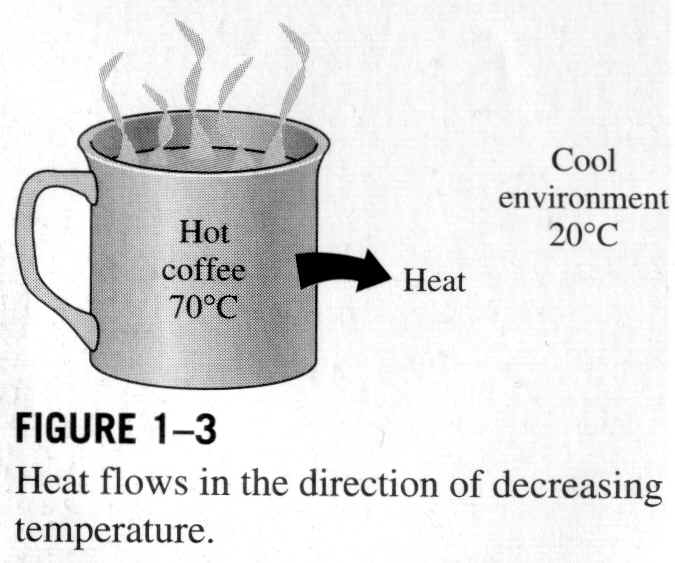
This is done through a series of intricate and intertwined mechanisms: The Malthusian Mechanism - Limited resources lead to wars, famine, diseases and to a decrease in the populace (and, thus, in the number of human Entropic Agents). The Assimilative Mechanism - Diseases, old and new, and other phenomena yield negative demographic effects directly related to the entropic actions of humans.

FrizeMedia Ghana SEO SEM Digital Marketing Proposal
The Best And Top Digital Marketing And SEO Services In Ghana
Examples: excessive use of antibiotics leads to drug-resistant strains of pathogens, cancer is caused by pollution, heart ailments are related to modern Western diet, AIDS, avian flu, SARS, and other diseases are a result of hitherto unknown or mutated strains of viruses. The Cognitive Mechanism - Humans limit their own propagation, using "rational", cognitive arguments, devices, and procedures: abortion, birth control, the pill. Thus, combining these three mechanisms, nature controls the damage and disorder that Mankind spreads and restores equilibrium to the terrestrial ecosystem.
Tweet
Follow @Charlesfrize


We Are Helping 1000 Businesses Amplify Their Online Presence