Small Business Advice

Get Online And
Showcase Your Business To The World
The 'Stop Doing' Strategy: Eliminate the Stupid Stuff to Win Customers

We are living in an era of relentless change. Shift happens, and it’s happening faster than ever.
Global competition is no longer a looming threat but a daily reality, putting immense pressure on businesses that were once market leaders.
In a desperate scramble to protect margins and hit quarterly targets, many organizations are making counterproductive decisions that defy both sound business logic and the basic principles of customer loyalty.
Most marketing strategies are an exercise in addition. They focus on what new initiative to launch, what new channel to conquer, or what new discount to offer to squeeze another dollar out of existing customers. It’s a constant cycle of "doing more."

But what if the path to growth isn't about doing more, but about doing less? I'm suggesting a fundamental shift in thinking: instead of obsessing over what to do next, take a hard look at what you should stop doing altogether. In other words, identify and eliminate the "stupid stuff."
"Stupid stuff" isn't just an inconvenience; it's any policy, process, or behavior that actively discourages customers from spending money with you. It’s the friction in the machine, the pebble in the shoe. Stopping the stupid stuff means systematically identifying these points of friction, the moments that exasperate, discourage, hassle, or confuse your customers, and ensuring that action or reaction is eradicated from your business forever.

Glaring Examples of "Stupid Stuff" to Stop
- Stop Charging for Basic Human Interaction. Some airlines now charge customers a fee simply to speak with a live agent. This is a masterclass in "stupid stuff" for two reasons. First, they are financially penalizing customers for wanting the very service, one-on-one, problem-solving attention, that builds brand loyalty. Second, they’ve framed it as a surcharge for something that was previously a standard, expected part of the service. How many travelers, already frustrated by a booking glitch, will be driven permanently to a competitor after being asked to pay for the privilege of fixing it? I know of at least one.
- Stop Making Your Returns Process a Battlefield. A clothing retailer requires customers to print a return label, repackage the item perfectly, and then wait 10-14 business days for a refund to be "processed." This "stupid stuff" treats the customer like a potential thief and turns a simple act into a week-long chore. The message is clear: we don't trust you, and your time is worthless to us. The smarter play is to make returns effortless, instant in-store credit, a simple QR code scan at a drop-off point, or immediate refunds. It builds immense trust and encourages the next purchase.

- Stop Hiding Behind Automated Customer Service Hell. "Your call is very important to us…" is the universal lie of the modern age. Forcing customers through a labyrinth of automated menus that lead to dead ends, only to be disconnected, is a prime example of "stupid stuff." It screams that efficiency for the company is valued far above the customer's time. Stop this. Offer a clear, simple callback option. Train your human agents to actually solve problems on the first call, not just read from a script.
- Stop Punishing Loyalty with "Introductory" Deals. A long-standing mobile phone customer discovers that the company’s latest, most generous promotion is only available to "new customers." The implicit message to the person who has paid their bill faithfully for five years is: your loyalty means nothing; we only value people who haven't experienced our service yet. This is incredibly "stupid stuff." Flip the script. Create "thank you" offers that are exclusively for existing customers, making them feel valued rather than taken for granted.
- Stop Using Jargon in Sales Proposals. A B2B software company sends a potential client a 20-page proposal filled with buzzwords, technical acronyms, and vague promises like "synergizing enterprise-level solutions." The customer, confused and unable to clearly understand the value proposition, takes their business to a competitor who can simply and honestly explain what they do. Stop forcing customers to be translators. Speak their language.

How to Start Stopping
The first step is to listen. Not to your internal stakeholders, but to your customers. Mine your customer service logs for recurring complaints. Read between the lines of online reviews. Conduct "exit interviews" with customers who left. Ask one simple question: "What was the most frustrating part of dealing with us?"
You are searching for the policies you have that you think are smart (saving money, preventing fraud, streamlining operations) but that your customers experience as stupid.
- Stop saying "No" as the default response. Train your team to find a path to "Yes," or at the very least, to offer a helpful alternative.
- Stop charging for services that technology and competitors have made standard and that customers now perceive as free.
- Stop creating friction in the name of cost-cutting. If a policy saves you a penny but costs you a customer, it’s the most expensive policy you have.
In a world of endless choices, the winning strategy isn't always about being the flashiest or the cheapest. Sometimes, it’s simply about being the easiest and most respectful to do business with. The companies that thrive will be the ones brave enough to look in the mirror and ask, "What stupid stuff are we doing today that we can stop tomorrow?"

Do You Take Your Laptop On Vacation?

Do you bring your laptop on holiday? Do you ever feel frustrated by your phone or other devices? A recent report by FrizeMedia Interactive found that roughly one-third of vacationers bring their laptops along. Not long ago, I observed a man at a restaurant, sharing a Sunday meal with his family while taking a business call on his cell phone. He did not look happy, and neither did his family.
To borrow from Charles Dickens, “It was the best of times, it was the worst of times.” That sentiment perfectly captures our era of constant connectivity.
So, here’s a question to consider: Should you bring your laptop on a trip? Is it necessary for your phone to be within reach at all hours? Clients often ask me, “What should I do?” I usually reply, “That’s not the right question. A better one is, ‘What are you going to do?’” An even more revealing question might be, “What do you want to do?” But the most important question of all may be: “Which choice will deliver the best outcomes?” To answer that, you must first define what your optimal outcomes truly are.
I often emphasize that one way to define “organization” is managing what is within your control to handle what is not. In today’s complex, hyper-connected world, it’s easy to slip into feeling like victims of others’ demands. I cringe when someone complains, “I have to answer my phone.” Who says you must? If you prefer not to be reached, you can always turn it off.

If your job demands that you remain reachable, then perhaps the question should be, "Am I in the right position?" Or have you just conditioned others to think you are perpetually accessible? Excellent customer service is important, but it doesn't necessitate being available around the clock. It requires effective communication. It's quite irritating to leave a message and not receive a reply for days, yet very few scenarios would be negatively impacted if the response came an hour later, allowing you to enjoy a meal with a colleague without interruptions.
The allure of constant connectivity can be difficult to resist. A close friend of mine, who holds a doctorate in counseling, reminded me that an addiction is something that diminishes the quality of your life as well as the lives of those around you.
How does this relate to productivity? My enthusiasm lies in assisting people and organizations in cultivating and maintaining an efficient environment where everyone can complete their tasks and relish their lives. When used wisely, connectivity aids in achieving your goals and allows for leisure. However, when mismanaged, it can disrupt your work priorities, harm your health, and damage your personal relationships.
The matter at hand isn't about whether you bring your laptop on holiday or keep your phone on continuously. For some individuals, being able to check emails once daily during a vacation provides peace of mind and can be done while others are asleep or enjoying a swim. For others, the essence of a holiday lies in leaving the laptop behind. There is no definitive “correct” or “incorrect.” The real question is whether your decision is enriching or detracting from your life and the lives of those around you.
So, should you “Power Off” or “Power On?” – the choice is entirely yours!
P.S. SOMETHING TO PONDER: Your capability to make any connection more meaningful depends on your ability to locate the information you need when required. Are you squandering precious time searching for what you need? Would you be able to find the resources your colleagues have if necessary?
Get Online And Showcase Your Business To The World
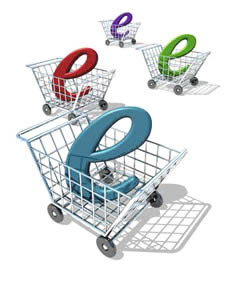
Small business advice: The best advice for small business owners today will to establish an online presence. It matters not if your company consists of twenty people or just two, having a website is valuable to companies of all sizes. As ecommerce becomes a more significant part of sales, businesses that do not have a website will be losing out on both revenue and customers. Fortunately, it is not too challenging to design a website for your products and services. Unlike in the past, today, there are many valuable web builder tools and apps that allow users of all skill levels to design their own site.

Many companies offering these products will often let customers test drive their web builder tools before actually committing to a purchase. This gives you the chance to become comfortable with the tools and see how they can help you in designing your site. You then have the option of signing up for a paid subscription of your choice.
A website or an app is a great idea even for businesses that are doing well without the help of online sales. In today’s highly technical world, businesses that do not have a website may be viewed as outdated or unprofessional. This is especially true when you consider the age group of your potential customers.

Younger adults who have grown up using computers are much more likely to order from a company that offers their products online. There aren’t too many companies today that would tell you they couldn’t benefit from additional sales. Web builder tools allow small business owners the opportunity to make their company products available to customers of all ages across the globe.

If you happen to have a business that frequently deals with customers from other countries, you know what a hassle it can be making contact because of the different time zones. An app or a website allows you to make sales from anywhere in the world 24 hours a day, seven days a week. Even while you are not at work, your business can be earning sales via your website.
Once your business develops an online presence, you may find the majority of sales are made online. Using web builder tools to design your site just makes good sense. It’s both fast and efficient and can increase your sales earnings in just a short time.

FrizeMedia Ghana SEO SEM Digital Marketing Proposal
The Best And Top Digital Marketing And SEO Services In Ghana
Web builder tools not only save you time and money designing your site but can also save time and effort when dealing with customers. Think about all the calls you or your employees answer regarding products, services, or payment plans accepted. With a website, you can offer all of this information to customers at the ease of their fingertips.
There’s no need for them to contact you when all of the information is provided online. This not only is convenient for both you and the customer but it also increases your chances of making a sale. Many times customers may not want to bother emailing or phoning for more information.

If they cannot find what they are looking for, they may go else where to another company that offers the product or service they are looking for. Web builder tools allow you to effectively design a site that contains information about all of your products, company background, and payment methods accepted. This can be a valuable resource in gaining additional customers. Even if your company sells a variety of different products, there are web builder packages available to meet your needs.
You can choose from a variety of different products and package sizes, many of which include web hosting, domain name, blog design tools, photo image editing tools, shopping carts, email accounts, and various design templates. Options can also be upgraded or added when needed. With all of the flexibility offered, web builder tools can benefit all types of businesses in designing their website.
Setting Up And Growing Your Small Business
Entrepreneurial Myths And The Truth Behind Them
Common Mistakes Small Businesses Make And How To Avoid Them
Number One Reason Businesses Fail
Does A Local Business Need A Website?
Small Business Advice - Increasing The Perceived Value Of Your Service
101 Marketing Strategies Essential For Your Business
Adsense Basics And How It Can Help Your Business
Is Branding Your Business Really Important?
How Can Dropship Business Help You?
Blogging Advice - Affiliate Marketing And Blogging
Browse All Our Informative Topics
InternetBusinessIdeas-Viralmarketing Homepage
Tweet
Follow @Charlesfrize