Rare Earths
Understanding Rare Earths Elements: Resources, Uses, and Global Impact
Commodities Rio Tinto Energy Mining Livestock And Meat Textiles Metals Grains Food And Fibre Precious Metals Energy And Utilities
Aclara Advances Carina Rare-Earth Project in Brazil Targeting 2028 Commissioning

The Carina Rare-Earth Project, a mining development located in Brazil’s state of Goiás, is advancing under the ownership of Aclara Resources. Project commissioning is currently anticipated to begin in the second half of 2028.
Aclara submitted the project's environmental impact assessment to state authorities in May 2025.
Key regulatory and development milestones are approaching, with approval for the preliminary licence expected in the first quarter of 2026 and the feasibility study targeted for completion by the second quarter of 2026.
According to a pre‑feasibility study released in September 2025, the projected capital outlay for the project is approximately $680.5 million. Early construction activities are scheduled to begin by mid‑2026, with full fast‑track construction planned for 2027. Following the start of commissioning in late 2028, a production ramp‑up will extend through 2029.
Over a projected 18‑year operating life, the Carina Project is designed to deliver an average annual production of 4,265 tonnes of total rare earth oxides.

Carina Rare-Earth Project in Brazil
The Carina Rare-Earth Project, located in the municipality of Nova Roma in the Brazilian state of Goiás, is an advanced-stage heavy rare earths mining development. Owned 100% by Aclara Resources, the project is progressing through permitting with production expected to commence in 2028.
Core Geographic Location
The project's property is situated in central Brazil, approximately 570 km northeast of the state capital, Goiânia, and roughly 370 km north of the national capital, Brasília. The site is accessed via a 30 km maintained gravel road from Nova Roma, with additional unsealed tracks providing internal access.
Land Tenure and Ownership
Aclara Resources secured full ownership of the project's mining rights in February 2024 after fulfilling an earn-in agreement. The project comprises six mining licenses (exploration permits) covering 9,863.6 hectares, each with a three-year term. Within this perimeter, there are 14 individual landholdings under possessory rights.
Geological Setting and Strategic Importance
The Carina project is geologically situated within the Paranã Fold Belt of the Tocantins Structural Province. The mineralization is a regolith-hosted, heavy rare earth ion-adsorption clay (IAC) system, developed over hydrothermally altered A-type granites of the Pedra Branca Massif. This geological setting is highly favorable for critical heavy rare earth elements (HREEs) like dysprosium (Dy) and terbium (Tb), which are essential for permanent magnets in electric vehicles and wind turbines.
Development Status and Strategic Context
The project is on a fast-track development path:
Current Stage: Permitting and feasibility. A pre-feasibility study was completed in late 2025, and a full feasibility study is targeted for mid-2026.
Pilot Testing: Aclara inaugurated a semi-industrial heavy rare earth pilot plant in Aparecida de Goiânia, Goiás, in April 2025 to test and optimize the extraction process specifically for Carina clays.
Production Target: Commissioning is anticipated in the second half of 2028, with a ramp-up to full production through 2029. The mine is planned to operate for approximately 18 years.

Carina Rare Earth Project Mining Plan
The Carina Project holds probable reserves of 165.4 million tonnes, grading 1,723 ppm total rare earth oxides. This includes 336 ppm neodymium-praseodymium, 47 ppm dysprosium, and 7.5 ppm terbium.
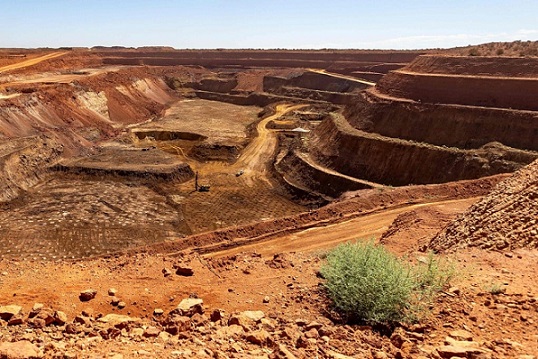
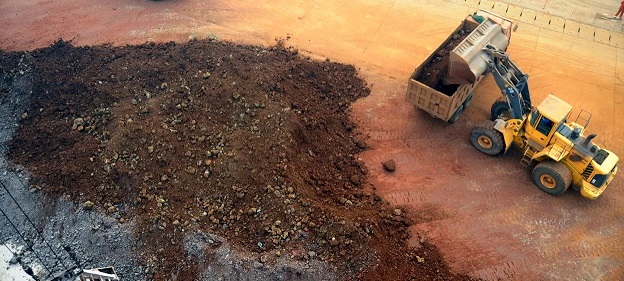
Mining & Operations Plan The project will be a conventional, year-round open‑pit operation using a load‑and‑haul fleet without the need for drilling or blasting, due to the orebody's friable nature.
Mining Method: Selective mining will employ 4m benches, with 2m flitches at ore–waste contacts.
Material Handling: Washed clay will be filtered and co‑disposed with waste rock in a dedicated facility.
Haulage: Roads within and outside the pit will be engineered to maintain optimal gradients.
Schedule: A six-month pre‑stripping phase in 2028 will stockpile ore, followed by plant start‑up in 2029 and a one-year ramp‑up to full design throughput.
Operations: Mining will be conducted on a three‑shift basis by a contracted mining services provider.
The primary fleet will comprise 95t hydraulic excavators fitted with 6.5m3 buckets and 75t off‑road trucks.

Ionic Clay Rare Earth Processing: From Ore to Market-Ready Product
Aclara has designed a processing plant to recover rare earth elements (REEs) from ionic clays, producing intermediate-grade REE carbonates and hydroxides. The facility is designed for an average annual production of 4,265 tonnes of rare earth oxide equivalent, excluding ramp‑up and closure periods.
Processing begins with run‑of‑mine (RoM) ore, which is either stockpiled or sent directly to a conditioning area for slurry preparation. This slurry is fed into the ion‑exchange circuit where rare earths are leached within washing drums. The plant's front end consists of four parallel washing trains, each handling roughly a quarter of the RoM feed at a nominal rate of 350 wet tonnes per hour.
Following leaching, the slurry is dewatered. This circuit separates a low‑moisture solid residue, which is returned to the mine, from a rare‑earth‑rich solution. This solution advances to stirred reactors for primary precipitation.
The reactor discharge then undergoes impurity removal and polishing filtration, which also treats recirculated clean solutions from backwashing and solids washing. The resulting clarified solution, containing dissolved rare earths with impurities largely removed, proceeds to a second reactor train. Here, pH adjustment triggers the precipitation of the rare earths.
Finally, the precipitated slurry undergoes solid-liquid separation to yield a low‑moisture final product. This material is then packaged and stored on-site for shipment to customers.
Supporting this process, Aclara inaugurated a semi‑industrial heavy rare earths pilot plant in Aparecida de Goiânia, Brazil, in April 2025. This facility is designed to produce dysprosium and terbium as primary products, along with other heavy and light rare earths, and serves to test and refine the proprietary extraction process developed for the Carina clay deposits.

Carina Project Infrastructure Overview
Site Access
The project site is accessible via a 30-kilometre maintained gravel road from Nova Roma. Internal unsealed tracks, suitable for four-wheel-drive vehicles, provide access across the property.
Water Supply & Management
Fresh water will be sourced from the Paranã River, located approximately 7.5 kilometres away, at a planned rate of 100 litres per second for plant and site use. The water management system is designed to maximise recycling and minimise river abstraction. It will include in-pit sumps, a sedimentation pond, pumping systems, a raw water storage tank, a reservoir, pipelines, and a dedicated water treatment system.
Power Supply
Electrical power will be delivered to the site via a new, dedicated 230kV high-voltage transmission line. This single-circuit line will extend approximately 100 kilometres. A main substation will step down the incoming power to 138kV for distribution through a network of secondary substations located near key operational areas.
Project Consultants
The pre-feasibility study was led by Hatch. Additional engineering and consulting support was provided by L&M Geociencias, Promet 101 Consulting, Abelco Consulting, LOM Consultoria em Mineração, F&Z Consultoria e Projetos, ERM Consultants Canada, and Argus Media.

Rare Earths Elements: Critical Yet Complex. Powering Modern Technology Amid Geopolitical Challenges
Rare Earths Elements (REEs) comprise 17 metallic elements, 15 lanthanides plus scandium and yttrium, that, despite their misleading name, are not exceptionally scarce in the Earth’s crust.
However, they rarely occur in concentrated, economically viable deposits, making extraction technically challenging and environmentally intensive.
REEs are indispensable to modern technology: their unique magnetic, luminescent, and electrochemical properties enable everything from the powerful permanent magnets in electric vehicles and wind turbines to the vibrant displays in smartphones and advanced medical imaging devices.
Currently, China dominates the global REE supply chain, controlling the majority of mining, processing, and refining capacity, a concentration that raises strategic and geopolitical concerns for other nations seeking secure, sustainable access to these critical materials.
What They Are
- A Group of 17 Elements: Includes the 15 lanthanides (atomic numbers 57–71), plus scandium (Sc) and yttrium (Y).
- Chemically Similar: They share comparable chemical properties, yet each element offers distinct functional advantages.
- Historical Misnomer: The term “rare earths” stems from the historical challenge of extracting them from scarce, oxide-rich minerals, not from actual scarcity in the Earth’s crust.
Why They Matter
- Technological Backbone: Essential to modern technologies, including green energy (wind turbines, electric vehicles), consumer electronics (smartphones, displays), defense systems (precision-guided weapons, lasers), and medical equipment (MRI machines).
- Enabling Properties:
- Neodymium enables ultra-strong permanent magnets.
- Europium and terbium produce vibrant reds and greens in displays.
- Erbium amplifies signals in fiber-optic communications.
- Cerium acts as a catalyst in catalytic converters and polishing compounds.
Why “Rare” (But Not Really)
Geologically abundant, economically scarce.
- Geochemically Dispersed: Rare earth elements are as common in the Earth’s crust as metals like copper, but they seldom occur in concentrated, economically viable deposits.
- Extraction Challenges: Their strong chemical bonds make separation from ore complex, energy-intensive, and often environmentally taxing.
- Supply & Geopolitics: China dominates global mining and processing, raising strategic supply chain concerns.
- Growing Demand: Accelerated by the clean energy transition and the proliferation of high-performance technologies, from electric vehicles to AI hardware, these elements are indispensable to both today’s tech and tomorrow’s innovation.
Key Facts:
- Critical Applications: Rare earth elements (REEs) are essential to modern technologies, including high-performance permanent magnets (e.g., neodymium in electric vehicles and wind turbines), phosphors for displays and lighting, rechargeable batteries, catalytic converters, and advanced defense systems.
- Concentrated Supply Chain: China controls roughly 60–70% of global REE mining and an even larger share, about 85–90%, of refining capacity, creating significant geopolitical risk and supply chain vulnerabilities for other nations.
- Environmental Challenges: REE extraction and processing often generate radioactive waste (due to co-occurring thorium and uranium) and toxic byproducts, necessitating stringent environmental safeguards and responsible waste management.
- Recycling Potential: While REE recycling from end-of-life electronics remains limited, it is gaining momentum as technologies improve and economic incentives grow, offering a promising path to reduce primary mining dependence.
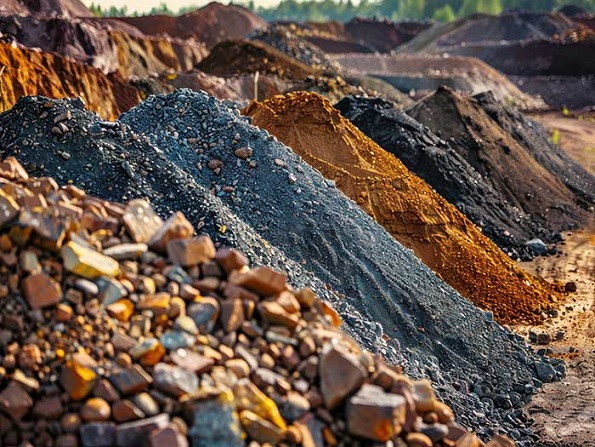
You're touching on a critically important nexus: rare earth elements (REEs) sit at the intersection of geopolitics, advanced technology, investment strategy, and sustainability. Here's a concise yet comprehensive overview across those four dimensions:
1. Geopolitics
- China’s Dominance: China controls roughly 60–70% of global rare earth mining and 85–90% of refining capacity. This gives it significant leverage over supply chains for everything from EVs to defense systems.
- Strategic Responses:
- The U.S., EU, and allies are actively diversifying supply chains (e.g., MP Materials in the U.S., Lynas in Australia).
- Initiatives like the Minerals Security Partnership aim to secure non-Chinese sources.
- Countries like Vietnam, Brazil, and India have untapped reserves but lack processing infrastructure.
- Export Controls: China has used export restrictions in the past (e.g., 2010 dispute with Japan) and retains this as a geopolitical tool.
2. Technology Dependence
Rare earths are essential for:
- Permanent magnets (neodymium, praseodymium, dysprosium) → used in EV motors, wind turbines, hard drives, and drones.
- Phosphors & catalysts (europium, terbium, cerium) → lighting, displays, petroleum refining.
- Defense tech: Guidance systems, radar, sonar, stealth tech.
- No easy substitutes: Despite R&D into alternatives (e.g., ferrite magnets, induction motors), performance trade-offs remain significant in high-end applications.
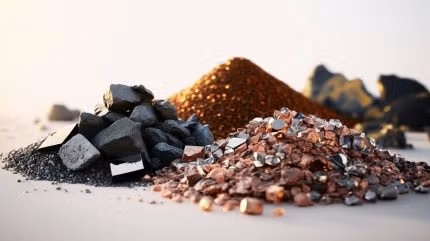
3. Investing
- Public Companies:
- MP Materials (MP) – U.S.-based, operates Mountain Pass mine; refining still largely reliant on China.
- Lynas Rare Earths (LYC.AX) – Australia-based, operates in Malaysia; only major non-Chinese refiner.
- Iluka Resources (ILU.AX) – Developing Australia’s first integrated REE refinery.
- ETFs & Funds: Consider commodities or critical minerals ETFs (e.g., SPXCEF, CRIT), though pure REE exposure is limited.
- Risks:
- Price volatility (e.g., neodymium prices swung >300% between 2020–2022).
- Long lead times for new mines (10+ years).
- ESG scrutiny due to radioactive thorium/uranium byproducts in some deposits.
4. Sustainability
- Environmental Cost: REE mining produces radioactive waste, acid runoff, and high carbon footprints, especially in regions with lax regulation.
- Circular Economy:
- Recycling is underdeveloped (<5% of REEs currently recycled) but growing (e.g., HyProMag’s hydrogen-processing tech).
- Urban mining (recovering REEs from e-waste) could supply up to 25% of demand by 2040 (IEA estimate).
- Green Paradox: Clean tech (EVs, wind) depends on materials with dirty extraction processes, highlighting the need for responsible sourcing and design for disassembly.
Strategic Takeaway
Rare earths exemplify the tension between decarbonization and supply chain security. For investors and policymakers, the priority is de-risking, through diversification, recycling, and innovation, while balancing environmental and ethical concerns.
Tweet