Entrepreneurship
Launch, Lead, Scale: The Entrepreneur’s Hub

Branding Business Marketing Entrepreneurship Advertising Public Relations Creative Thinking Management Thought Leadership Wealth Creation Marketing Strategies Real Estate Success
The Entrepreneur's Shield: Why Establishing Business Credit Is Non-Negotiable

As an entrepreneur, you are naturally hardwired to accept a higher level of risk than the average person.
You take calculated chances on products, markets, and growth strategies. However, there is a distinct line between business risk and personal financial exposure.
Ask yourself: Are you willing to risk your personal financial stability for your business ventures? Specifically, are you comfortable with the possibility of:
Being personally hounded by business creditors?
Jeopardizing your ability to declare personal bankruptcy if needed?
Being denied a personal mortgage due to business debt utilization?
Paying inflated interest rates because your personal credit is maxed out?
Losing personal assets, such as your home or car, to satisfy business debts?
If you answered "no" to any of these questions, understanding the separation of personal and business finance is the most critical step you can take for your long-term security.

The Commingling Trap
Most entrepreneurs inadvertently make financially devastating mistakes when financing the launch or growth of their companies. The most common error is commingling funds. This occurs when a business owner uses personal savings to fund startup capital or relies on personal credit cards to pay for business expenses.
While this seems convenient in the short term, it creates a "personal guarantee" by default. When you use personal credit for business expenses, you are legally and financially tying your personal credit score to the performance of your business. If the business hits a rough patch, your personal credit score suffers. If the business is sued, your personal assets are often exposed.
What Is Business Credit?
Business credit is a financial profile separate from your personal credit history. It is tied to your company's Employer Identification Number (EIN) rather than your Social Security Number. When established correctly, it allows your business to borrow money, lease equipment, and secure lines of credit based on the company's own merit.
The ultimate goal of building a business credit profile is to obtain unsecured business lines of credit. Once approved, these funds provide working capital that you control via checkbook or card access. Crucially, activity on these accounts typically does not report to your personal credit bureaus, meaning high utilization on business cards will not lower your personal FICO score.

Real-World Examples of Business Credit in Action
To understand the power of separation, consider these two scenarios:
Example 1: The Cash Flow Gap
Without Business Credit: A consulting firm lands a large contract but must pay subcontractors immediately. The owner puts $50,000 on their personal Visa to cover payroll. Their personal credit utilization spikes from 10% to 80%. Consequently, their personal credit score drops 40 points. When they apply for a home refinancing the next month, they are denied or offered a higher interest rate.
With Business Credit: The same firm uses a dedicated business line of credit to cover the $50,000 payroll. The debt sits on the business's EIN. The owner's personal credit utilization remains at 10%. When applying for home refinancing, their personal score remains pristine, securing the best possible rate.
Example 2: Equipment Expansion
Without Business Credit: A landscaping business needs a new truck costing $60,000. The owner applies for a loan using their personal income and credit. The bank sees the owner already has a mortgage and two car notes. The debt-to-income ratio is too high, and the loan is denied.
With Business Credit: The business has an established profile with vendors like Uline or Grainger reporting payments. The business applies for a fleet credit account. The lender looks at the business's revenue and payment history, not the owner's personal debt. The truck is financed under the company name, protecting the owner's personal liability.

Key Benefits of a Separate Credit Profile
1. Asset Protection
The primary function of a corporation or LLC is to limit liability. However, if you personally guarantee all your business debts, you pierce that corporate veil. Business credit allows you to maintain that legal protection, keeping your home and savings safe from business creditors.
2. Access to Capital for Startups
Contrary to popular belief, it is possible for new entities to access capital. If your business profile is set up correctly with the proper licensing, banking relationships, and vendor tradelines, certain lenders specialize in funding startups. This allows you to finance the business of your dreams without draining your personal savings.

3. Higher Credit Limits
Business credit lines often offer significantly higher limits than consumer cards. It is not uncommon for established businesses to secure limits in the five or six figures, providing the liquidity needed to scale operations quickly.
4. Saleability of the Business
A business with its own credit history and financing relationships is more valuable than one dependent on the owner's personal wallet. If you decide to sell the company, a transferable credit profile makes the transition smoother for the new owner.
The Bottom Line
Many business owners are unaware that they can establish a credit profile independent of their own. They lull themselves into thinking that using personal funds is a minor inconvenience, only to realize the consequences when they are denied a mortgage or hounded by collectors.
Make no mistake: Business credit is a MUST for every business owner.
Do not put your personal assets at risk to fund your business. Take the time to educate yourself on establishing business credit, secure your EIN, and build a financial profile that allows your company to stand on its own. Your future financial security depends on the separation you create today.

From Idea to Empire: Your Entrepreneurship Launchpad

A businessman/woman makes his/her place in the market with his or her efforts and dedication, whereas an entrepreneur creates the market for his own business. The businessman is a market player while Entrepreneur is a market leader because he is the first to start such a kind of enterprise. Entrepreneurship is a process of actions of an entrepreneur who is a person always in search of something new and exploits such ideas into gainful opportunities by accepting the risk and uncertainty with the enterprise.

Passion, resourcefulness, willingness to improvise and listen to others and strong determination to succeed is what makes an entrepreneur successful. And this is what you have to keep in mind if you want to be a successful entrepreneur. Conventional wisdom might say big business has it made. On the other hand, I believe that there will always be a special place for small business. Entrepreneurs have an edge over their bigger competitors.

Small business advertising: If you run a small business, advertising costs must be figured in as part of your overall expenses. If you have received quotes for phone directory ads, business association block ads, and mostly any other print media, these costs are quite high. So, what if your budget is small, perhaps negligible? Will you be left outside of the small business advertising arena or are there other avenues to help you get the word out? The answer in one word is: yes. Let’s explore ways you can “get the word out” through online means…yes, via the internet! The ascent of internet use has spawned an entire industry with it. please read more...

What advantages do the “little” guys have in the marketplace? Here are a few tips. Below is how to “think like a startup” and reap greater success.
HOW TO KEEP THE ENTREPRENEURIAL EDGE
1) STAY IN TOUCH WITH YOUR CUSTOMERS Ever heard of the 80/20 rule? The old adage says that 80% of your business will come from 20% of your customers. In business, the customer is king. It’s far easier to sell to an existing customer than to find a new one. So, once you get a customer, you need to service the heck out of them. So how do you make your customers feel like they are number one? By letting them know that they are top priority. This means answering your own phone, replying quickly to email requests. It means staying in regular communication with your customers. Keep up a good rapport. Send an occasional email asking them what’s new. Mail birthday cards or a customer anniversary card. Gestures like these can build close, long lasting customer relations and goes a long way to building customer loyalty. In addition to building stronger customer relationships, keeping in touch with your customer base can enable you to offer one to one marketing. By identifying your customers needs and buying habits, you can personalize product packages and service offerings to meet your customer’s individual needs.
2) LISTEN TO THE BEAT OF THE STREET If small business owners want to keep their head above water, they need to closely monitor their environments. By “listening” to the pulse, you can think proactively rather than react. This means spotting things when they are coming so you can act quickly and take advantage. Web stats - Do you look at your web stats and data regularly? Or are you guilty of being too “busy” to make time? Unless you regularly look at your web traffic and business reports, they probably will read like a foreign language to you. By looking at your reports regularly, you’ll be able to spot trends. What pages are your visitors going to? What is the hits-to-sales ratio? Are there new buying trends. What can you do to improve that number?

Feedback - Another way to “listen to the beat” is to get feedback from your customers. Try to be on a first name basis with your customers. Ask them how they are doing and if there is anything you could assist them with. The answers you’ll receive will be worth their weight in gold. Industry news - Keep up with the industry by reading everything you can get your hands on. When you work in “living room central” it’s easy to let yourself be isolated from the world. You can’t rely on your favorite soap operas to keep you informed about the current trends in business. So put down your munchies and flavored coffee and make a concerted effort to stay “in the know” by subscribing to print magazines and online newsletters
3) FLEXIBILITY When I think about flexibility, the childhood rhyme “Jack be nimble, Jack be quick, Jack jump over the candlestick” comes to mind. In order to keep from being burned, small businesses need to be nimble and quick. This means having the flexibility to act quickly in response to changes in the marketplace. Like a surfer riding a wave, you have to be in just the right place at the right time to ride the crest of the wave and get the best ride. Likewise, if small businesses monitor closely what’s going on in the marketplace, they can act quickly to take advantage of current events and trends in the marketplace. The saying goes, what gets measured, gets managed. Keep a close eye on your monthly financials. Listen to your customers. Measure the effectiveness of your advertising. Then when you see a difference ask yourself, “was that good or bad” and ACT!
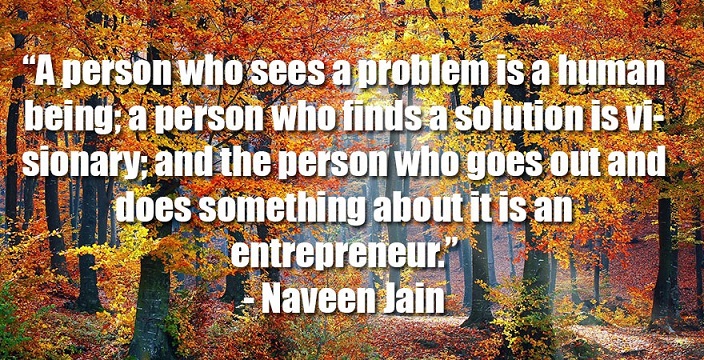
4) TAP INTO THE FIRE AND LET IT FUEL YOU Simply said, small business owners want it more. Because of this, they will try harder and go the extra mile. That’s why big companies like Wal-Mart have made their employees part owners in the company. They have seen that people will work harder for themselves than for anyone else. The best secret to success as an entrepreneur is to find something you are passionate about and create a business around that. When you do something you love you’ll never “work” a day in your life. Entrepreneurs have that fire in their belly. Find a way to tap into that internal fire and let it fuel you to success.
5) VALUE While big companies will often be able to offer lower prices, small businesses will always be able to pile on the value. By offering better service, adding bonuses, giving discounts on related products, the entrepreneurs can add more bang for the buck.
6) CREATIVE SPARK What’s great about entrepreneurs is that they aren’t afraid to try something new. When I think of “creative spark”, I think of a four year old eyeing a package of cookies up on top of the refrigerator. He doesn’t know that it is up really high and that climbing up there is dangerous. He only sees the cookies and starts stacking chairs and climbing. Similarly, entrepreneurs don’t “know” if something will work or not and fearlessly forge forward with their eyes on the prize. This innovation helps them to tap into new products, techniques, and processes.

SUMMARY They say, when the going gets tough, the tough gets going. When the market starts putting the heat on your business, ask yourself, are you staying “sharp”? Do you still have the entrepreneurial edge? By thinking like a start up, you will find that you will have the staying power to compete with the big boys on the block. And you’ll find that kind of hard-earned success is “oh” so sweet! Be innovative.
Characteristics Of An Entrepreneur
Common Mistakes To Avoid In Business
Catch The entrepreneurial Spirit
Focus On The Benefits To The Customer
Differences Between marketing And Advertising
Browse All Our Informative Topics
Internet Business Ideas Home Page

Tweet
Follow @Charlesfrize