Build a Branding Strategy That Drives Growth

Why a Strong Branding Strategy Matters
Branding Creative Thinking Business Marketing Article Marketing Small Business Advice Sales Brand Strategy Success Networking Strategic Branding Textual Advertising Brand Blueprint Small Biz Event Planning Brand Vision Marketing Research Entrepreneurship Management Training Identity & Strategy Marketing Branding and Marketing Business Marketing Strategies Niche Marketing Corporate Identity Management Public Speaking Customer Service Management Public Relations Small Business Advertising Viral Marketing Strategies

Beyond the Logo: Decoding the Myths and Realities of Modern Branding

For decades, branding has been misunderstood. Many still picture it as the visual frosting on a corporate cake, a slick logo, a trendy color palette, a memorable jingle.
While these elements are important, they are merely the surface. In reality, a brand is not what you say about yourself; it is the sum total of everything your customer feels, thinks, and experiences when they interact with your company.
It is a living, breathing promise. It is forged in every touchpoint, from the first search result and customer service call to the packaging, pricing, and post-purchase follow-up. A strong brand aligns what it promises with what it delivers, consistently and credibly. When that alignment breaks, trust erodes; when it holds, loyalty grows. Modern branding therefore demands operational discipline, cultural coherence, and genuine listening, not just clever design. It is a promise truly kept repeatedly across every interaction, long before and long after the logo itself.
This article explores the fundamental myths and realities of branding, revealing how a brand conveys its promise and why the product itself is the most powerful marketing tool you have.

The Great Branding Myths: Deconstructing Common Misconceptions
Before we can build a powerful brand, we must first clear the fog of common myths that lead businesses astray.
- Myth 1: Branding is Just Your Logo and Visual Identity. This is the most persistent myth. A logo is a signature, not the entire story. Think of a brand as a person: the logo is their face, but their brand is their reputation, personality, values, and the way they make you feel. Reality: Visuals are the doorway, but the experience is the house. A great logo on a terrible product only accelerates distrust.
- Myth 2: Branding is an External Marketing Exercise. Many believe branding is solely the domain of the marketing department, aimed at convincing customers. Reality: Branding is an internal culture. Your brand promise must be lived and breathed by every employee, from the CEO to the customer service rep. If your internal reality doesn't match your external messaging, you create a "brand gap" that customers will inevitably detect. A company that promises innovation but stifles employee ideas is living a lie.
- Myth 3: A Big Budget Equals a Big Brand. The belief that you can simply "buy" brand loyalty with massive advertising spend is a relic of the past. While capital helps, it cannot manufacture authenticity. Reality: In the age of social media and online reviews, trust is earned through consistent, quality experiences and genuine community engagement, not just purchased through ad space. Some of today's strongest brands, like Glossier or Gymshark, were built on community and word-of-mouth before they ever ran a traditional ad.
- Myth 4: Branding is a One-Time Project. The idea that you can "do" your branding and then move on is dangerously outdated. Reality: Branding is an ongoing, dynamic process. It requires constant listening, adaptation, and evolution to stay relevant. Netflix is a prime example, evolving from a DVD-by-mail service to a streaming giant to a content creation powerhouse, a continuous brand transformation.

The Core Reality: A Brand is a Promise
At its heart, a brand is a promise. It is a covenant of trust between a company and its customer. This promise is built on a foundation of consistent delivery.
This promise is conveyed through a multitude of factors, both explicit and implicit:
- Product Reputation and Experience: This is the bedrock. A product that performs as advertised, or even better, is the most potent brand-building tool. Think of the quiet satisfaction of unboxing an Apple product, the sleek packaging, the seamless setup, all of which reinforce the promise of premium quality and user-centric design.
- The Product Name and Logo: A catchy, easy-to-remember name and a well-designed logo act as mental shortcuts, instantly recalling the promise. A name like "The Honest Company" makes a direct promise about its ingredients and values.
- Market Positioning and Pricing: Price signals value. Rolex uses premium pricing to promise exclusivity, heritage, and precision. Conversely, IKEA uses affordable pricing to promise smart, accessible design for the masses.
- Social Proof: News, Reviews, and User-Generated Content: In the Web 2.0 (and now Web 3.0) world, what others say about you is infinitely more credible than what you say about yourself. A restaurant with a 4.8-star rating and hundreds of photos from real diners has a stronger brand promise than any ad campaign could create. Tesla's brand was built significantly on the enthusiastic testimonials and content created by its own customers.
- The "Cherry on Top" Analogy: Imagine an ice-cream pie. The scoops are your products, the apples are your corporate environment, and the crust is your systems (customer service, delivery, etc.). The brand is the cherry on top, the symbol and summary of the entire experience. But a cherry on a poorly made pie is meaningless. The entire dessert must be delicious for the cherry to be a true representation of quality.

The Modern Guide: Building a Brand That Means Something
Given these realities, how do you build a brand that not only survives but thrives in today's crowded, transparent marketplace? Here is a practical guide.
1. Define Your Core Promise: Start by answering a simple question: What do we promise our customers, every single time? Is it reliability, innovation, joy, affordability, or sustainability? Write it down. Make it the North Star for every decision.
2. Align Your Entire Business: Your brand promise cannot live in a silo. It must be reflected in your:
- Product/Service Quality: This is non-negotiable.
- Customer Service: How you handle a complaint is more brand-building than how you handle a sale.
- Internal Culture: Hire and train people who embody your brand values.
- Supply Chain: In the modern era, ethical and sustainable sourcing is part of the brand promise (e.g., Patagonia's commitment to the environment).
3. Develop a Targeted Promotional Mix: The way you communicate your promise should be tailored to your audience and product.
- Example: A local home-based business might find its brand amplified through community engagement and a strong Google Business Profile with glowing reviews, rather than expensive TV ads.
- Example: A B2B debt management service might build its brand by producing a series of high-value, informative corporate videos and white papers that establish expertise and credibility at industry events.
4. Harness the Power of the Community: Your customers are your best brand ambassadors. Encourage them to share their stories. Create a branded hashtag. Feature user-generated content. Engage in authentic conversations on social media. A brand that listens is a brand that is trusted.
5. Monitor, Listen, and Evolve: The conversation about your brand is happening right now, with or without you. Use social listening tools to understand what people are saying. Treat negative feedback not as a threat, but as an opportunity to demonstrate your commitment to your promise.
Conclusion
Ultimately, branding is not a cosmetic exercise. It is the strategic alignment of your company's entire being around a single, compelling promise. It is the quiet confidence of a customer who chooses you not because they saw an ad, but because you have earned their trust, time and time again. Stop thinking about branding as a logo and start thinking about it as your company's most important relationship.

How Strategic Branding Shapes Customer Perception and Loyalty

Business branding is the deliberate process of defining and promoting your company’s image to the public. It moves beyond logos and slogans to shape how customers perceive your values, whether that’s affordability, superior service, or product quality. For instance, Lowe’s cultivates an image focused on low prices, while Home Depot is associated with customer service and project help. This perceived identity builds trust, loyalty, and stability with a specific customer base.
Your branding strategy should align with your core business goals. The most common approaches focus on either exceptional customer service or competitively low prices. Each method attracts a distinct segment of shoppers, some prioritize support and guidance, while others seek the best deal. The critical element is consistency; your branding must reliably deliver on its promise to build customer trust.
The digital marketplace requires special consideration. While online shopping continues to grow, barriers like shipping delays and security concerns persist. Crucially, the internet is fundamentally an information-seeking tool. Unlike in physical stores, online shoppers frequently research products before purchasing. This creates a powerful opportunity for an informative presell, using detailed, helpful content to educate customers and guide their buying decisions.

You can effectively merge branding with this informational approach. Whether you lead with service or price, comprehensive product information supports your theme. A powerful strategy is to make detailed comparisons and transparent data a core part of your brand identity. By presenting information side-by-side, such as comparing budget versus premium features, you cater to both price-sensitive and quality-focused shoppers, building trust through transparency.
In conclusion, a clear branding strategy removes uncertainty for your customers. By defining and consistently communicating your company’s theme, be it service, price, or informative guidance, you provide a recognizable direction. This builds customer trust, encourages repeat business, and ultimately cultivates a loyal community around your brand.
What Is Brand Identity?

Branding: Brand Identity is a promise. One given from business to customer to expect certain things. Whether that promise involves product quality, service, price or a million other things varies from brand to brand. But the one thing common among all brands is the need to be a strong brand.
Why is brand identity so critical? A strong brand identity can position a company above its competition all by itself. But having a brand that strong takes time, money and effort to develop. It’s not as simple as just redesigning a logo or rewriting a tagline. Brand identity is the reason you offer for your customer to choose you instead of your competition.

How to rework your brand identity Successful re-branding involves “evolution,” not “revolution.” You must impress upon your existing customers that your new brand is just a new and improved version of the same you. It’s important to not get too crazy with a re-branding effort because you could end up destroying fragile emotional ties and customer loyalty.
Brand identity is much more than marketing Having a brand identity that resonates with your market is important, but not at the expense of the people within your company. They need to not only get it, but also be your brand’s most fervent ambassadors. Do your employees believe in your company? Do they feel like they have a vested stake in its success?
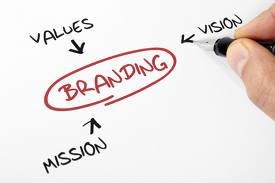
Branding - Values
Companies with solid brand identities can say yes to these questions. Can yours? If not, here are some things you can do:
1. Get every aspect of your company on the same page: Easier said than done, right? Well, that doesn’t mean it’s not necessary. Get all your departments talking to each other and understanding each other.

FrizeMedia Ghana SEO SEM Digital Marketing Proposal
The Best And Top Digital Marketing And SEO Services In Ghana
2. Promote everyone to the position of brand ambassador. Give everyone a common understanding of the company, its mission and their part in it. They should feel like they have ownership—even if they don’t.

Branding - Brand Identity
3. Reinforce brand values and behaviors: To do this, use the tools you have, such as internal communications…and like a good basketball coach, consistently promote these fundamentals until they’re second nature. Your employees will ultimately determine your success or failure. That’s why it’s so important to have them buy into your company’s brand identity. However, that’s not something that can be forced.
You, as leadership, must earn it. But once you do, you’ll have a company that is full of happy, motivated successful brand ambassadors.
Tweet
Follow @Charlesfrize

The Significance And Value Of A Brand
4 Secrets To Building An Engaging Experience
Tips For Overwhelmed Business Owner
Is Branding A Legitimate Internet Marketing Strategy?
The Benefits And Advantages Of Branding