Ghana Signs $28 Billion Jomoro Petroleum Hub Deal with 300,000-Barrel Refinery

How the Hub Fits into Ghana’s Industrialisation and Energy Security Goals
GoldBod Exceeds September Forex Target with $1.87bn from ASM Gold Trading

Ghana Gold Board’s 2030 Vision: Turning Raw Gold Exports Into Refined Value
Ghana GoldBod Ghana Economy Ghana News Updates Entrepreneurship Mining Energy Energy and Utilities Leadership Customer Service Management Creativity and Innovation Commodities Small Business Advice Business Marketing Strategies Public Relations Corporate Identity Management Management
Ghana Signs $28 Billion Petroleum Hub Expansion Deal With 300,000-Barrel Refinery
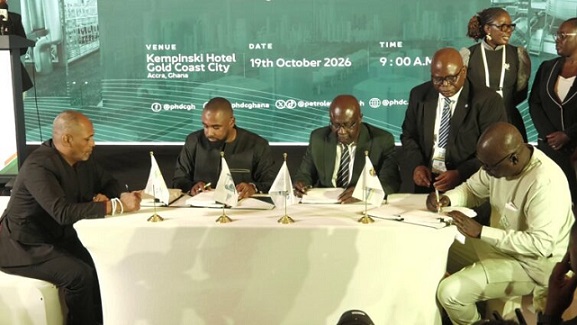
Ghana has signed a memorandum of understanding for a proposed $28 billion expansion of its Petroleum Hub, including a 300,000-barrel refinery, as the country seeks a larger role in West Africa’s fuel processing and distribution industry.
The plans also include petrochemical plants, storage facilities and a jetty.
The Petroleum Hub Development Corporation signed the agreement in Accra on 19 October with a consortium led by UAE-based Global Sphere, involving investors and technical partners from South Korea and Mali. Initial construction is targeted for early 2027, subject to preparatory requirements, though financing, land acquisition and compensation remain key hurdles.
According to the report on the announcement, PHDC Chief Executive Toni Aubynn said the development is expected to take five years. Initial construction activity in Jomoro is targeted for the first quarter of 2027, subject to preparatory requirements being completed.

The proposal could help President John Dramani Mahama’s government expand domestic processing and create business opportunities for engineers, construction firms, logistics operators and other suppliers. Aubynn linked the hub to the administration’s industrialisation plans and 24-hour economy agenda.
Those benefits depend on the consortium turning its commitment into financed and functioning infrastructure. The published announcement does not establish the debt and equity funding mix, the partners’ ownership stakes, or whether lenders have committed capital.
Ghana’s petroleum hub ambitions predate the latest agreement. In August 2024, then-president Nana Akufo-Addo presided over a groundbreaking ceremony for a separate first phase valued at $12 billion, which also included plans for a 300,000-barrel refinery. Reuters reported at the time that the broader development faced questions about commercial viability and opposition from some residents over its land footprint. That history makes the current financing and compensation arrangements central to assessing the new proposal.

The regional market has also changed since Ghana first outlined its plans. Nigeria’s Dangote refinery began commercial operations in 2024, introducing a major new source of locally processed petroleum products into a market that had historically relied on overseas supplies.
According to the US Energy Information Administration, Nigeria’s petroleum product exports rose sharply that year after the refinery began operating.
For Ghana, the challenge goes beyond attracting investment. The hub’s commercial viability will hinge on dependable crude supplies, competitive processing costs, reliable shipping infrastructure, and enough demand for its output.
Landowners and nearby communities have a direct interest in how the project unfolds. Jinapor has promised to bring in the finance and lands ministries and the Attorney-General’s Office to resolve remaining obstacles.
The next milestones will therefore be proof of committed funding, settled land arrangements, and construction activity, steps that would begin to show whether the proposed hub can fulfill Ghana’s regional energy ambitions.
Key Context
The Deal: A $28 billion agreement was signed on October 19, 2026 between Ghana’s Petroleum Hub Development Corporation (PHDC) and a UAE-led consortium (Global Sphere) for “Lot Two” of the Jomoro Petroleum Hub.
Core Components: The deal covers a 300,000-barrel-per-stream-day refinery, two petrochemical plants, 4 million cubic meters of storage, and a multi-berth jetty.
Timeline & Status: Construction is targeted to begin in Q1 2027, pending preparatory requirements, with completion aimed for within five years. However, financing is not yet finalized, and land/compensation issues remain.
Broader Context: The project is part of a larger $60 billion, three-phase plan (2024–2036) that ultimately envisions three refineries with a combined capacity of ~900,000 barrels per day.

Tweet