Thought Leadership

Forward Thinking Ideas That Move Us
A Good Leader Knows the Team’s Colours: Harnessing Personality Diversity for High-Performance Teams

Leadership is rarely about commanding from the top, it’s about connecting, empowering, and orchestrating diverse talents toward a shared goal.
Rarely do leaders get to handpick their teams; more often, they inherit a group with entrenched dynamics, varied experiences, and sometimes even skepticism toward new leadership.
In such complex environments, one of the most powerful tools a leader can wield is an understanding of personality diversity, what many frameworks describe metaphorically as “team colours.”
By recognizing the distinct working styles, motivations, and communication preferences of different personality types, leaders can assign roles strategically, resolve conflicts empathetically, and create a culture where every member feels seen, valued, and inspired to contribute their best.

Below is an overview of four core personality archetypes, commonly represented by the colours Gold, Blue, Green, and Orange, along with practical examples of how a savvy leader can leverage each type’s natural strengths:
Gold: The Dependable Achiever
Core values: Structure, responsibility, loyalty, and reliability
Best in roles that require: Planning, execution, consistency, and attention to deadlines
Example: A Gold team member thrives when given a clear project timeline with defined milestones. They’ll meticulously track progress and alert you early if deadlines are at risk.
Leadership tip: Provide clear expectations, acknowledge their reliability publicly, and offer structured feedback. Avoid ambiguity, they prefer “what, when, and how” over open-ended directives.
Blue: The Empathetic Connector
Core values: Harmony, collaboration, emotional authenticity, and service
Best in roles that require: Customer relations, team morale, mediation, or creative brainstorming
Example: During a tense team meeting, a Blue member might gently reframe a conflict into a shared problem, helping others reconnect emotionally. They’re often the glue that holds team spirit together.
Leadership tip: Foster a supportive, inclusive environment. Involve them in people-focused initiatives. Avoid pitting them against peers in competitive scenarios, they excel through cooperation, not rivalry.

Green: The Analytical Strategist
Core values: Accuracy, logic, innovation, and mastery of systems
Best in roles that require: Data analysis, technical design, problem-solving, or long-term planning
Example: When your team faces a complex operational bottleneck, the Green member will dive into root-cause analysis, model scenarios, and propose systemic fixes, often with minimal fanfare.
Leadership tip: Give them space to think deeply and access to quality data. Minimize unnecessary social demands or rigid administrative tasks. Communicate with them using facts, not feelings.
Orange: The Dynamic Doer
Core values: Freedom, agility, results, and hands-on action
Best in roles that require: Crisis response, sales, fieldwork, or creative execution
Example: In a fast-moving product launch, an Orange team member might improvise a client demo on the spot, turning a technical glitch into an engaging story that wins over stakeholders.
Leadership tip: Offer autonomy and avoid micromanagement. Challenge them with tangible outcomes and rapid feedback loops. Bureaucracy drains their energy, keep processes lean and purpose-driven.

The Leader’s Role: Conductor, Not Controller
Knowing your team’s “colours” isn’t about labeling, it’s about strategic empathy. A leader who blends these energies effectively can:
- Assign a Green to design the strategy, a Gold to implement it, a Blue to ensure team alignment, and an Orange to drive momentum.
- Tailor feedback: Golds appreciate structure in critique, Blues need emotional safety, Greens want logic over tone, and Oranges respond to direct, action-oriented coaching.
- Prevent burnout by shielding Greens from excessive social demands or Oranges from rigid reporting structures.
In the end, high-performing teams aren’t made of perfect people, they’re made of well-placed people. A good leader doesn’t try to change team members to fit a mold. Instead, they see the colours, understand the palette, and paint a picture where everyone’s hue contributes to the masterpiece.
By mastering this art, leaders don’t just meet expectations, they exceed them, not through force, but through insightful orchestration.

Build Influence Empower A Loyal Team

Thought Leadership: Despite the fact there are individuals who consider the terms management and leadership as synonyms, the two ought to be distinguished. In reality, there can be leaders of completely unorganized groups. On the other hand, there can be managers, as conceived here, only where organized structures create roles. Separating leadership from management has significant analytical advantages. It permits leadership to be singled out for study without the hindrance of qualifications relating to the more general issues of management. To clarify, leadership is certainly an important aspect of managing. The capacity to lead effectively is one of the keys to being an effective manager, also undertaking the other essentials of managing.

Performing the entire managerial job has a principal bearing on ensuring that a manager will be an effective leader. Managers must exercise all the functions of their role in order to combine human and material resources to achieve objectives. The key to doing this is the existence of a clear role and a degree of discretion or authority to support the manager’s actions.
The essence of leadership is followership.
In other words, it is the willingness of other people to follow that makes a person a leader. Moreover, people tend to follow those whom they see as providing a means of achieving their own desires, wants and needs. Leadership and motivation are closely interconnected. By understanding motivation, one can appreciate better what people want and why they act as they do.
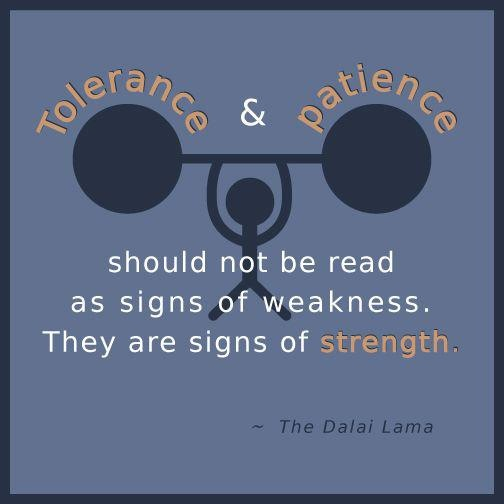
Thought Leadership - Tolerance And Patience
Furthermore, leaders may not only respond to subordinates' motivations but also arouse or dampen them by means of the organizational climate they develop. Both these factors are as important to leadership as they are to management. Leadership can be defined as influence, that is, the art of influencing people so that they will strive willingly and enthusiastically toward the achievement of group goals.
Ideally, people should be encouraged to develop not only a willingness to work but also a willingness to work with zeal and confidence.
Team Building Team building is very important when it comes to managing people. People are simply more willing to work together, when the atmosphere encourages it. For many organizations this is quite necessary for the business to run efficiently. When everyone gets along, things just go better.
They provide better service to the customer. They work together to deliver satisfaction with smiles. They also help to promote employee retention. Customers are happy, employees are happy, and the world is now a better place, right?

Team building is anything but simple. It is not something that can be done overnight. Nor is it something you can force people to do. So, how can you effectively build your team to encourage them to bond and develop working relationships that are positive? There are many things that you can do. Here are some ideas:
• Set the example yourself. As the leader of the team, it is up to you to provide a good relationship with your team players.
You want them to feel comfortable with you as well as with others. Don’t favor some and don’t become too friendly either.
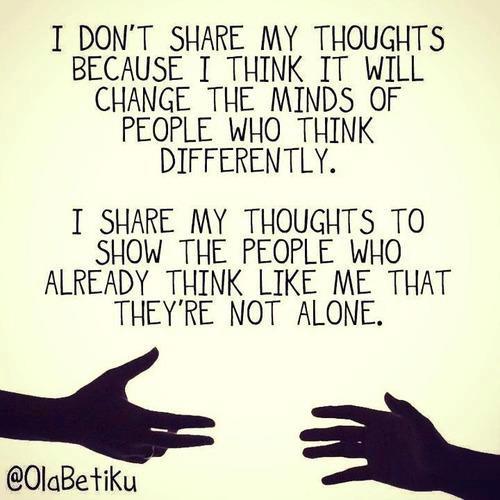
Thought Leadership - Thoughts Become Things
- • You can encourage relationships to work by fostering a teamwork style. Make sure that the goals are established and that each team player is aware of them. They should know that you want a team work environment that is what you are looking for in your employees.
- • Also, provide them with opportunities to get to know each other. Take the team out to dinner on you. Encourage them to talk about their families and lives so that they can bond.

When team building is successful, there are many things that can happen. Not only will the business run better, but you can foster good qualities in individuals to come out. You can have a bond of trust and reliance with your team. Team building is an exceptional quality that you should encourage in some form or another with your team.
Motivate And Inspire By Your Actions
Effective Listening And Communication
8 Steps To Leadership Behaviors
Browse All Our Informative Topics
InternetBusinessIdeas-Viralmarketing Home Page
Tweet
Follow @Charlesfrize